BENGALURU: Reduction of economic activities during the pandemic-related lockdown had resulted in decrease of air pollution in most parts of India, but satellite observations show that parts of India showed an increase in pollution in contrast to the general trend.
Scientists from the Aryabhatta Research Institute of Observational Sciences (ARIES) have identified that regions in the central-western part of India and north India are prone to higher air pollution exposure based on state-of-the-art satellite observations and hence are exposed to greater risk of respiratory problems.
ARIES said while satellite-based observation of toxic trace gases — ozone, nitrogen-di-oxide and carbon monoxide — near the surface and in the free troposphere mostly showed a reduction of the pollutants over India, an increase of ozone and other toxic gases was observed in western-central India, parts of northern India, and remote Himalaya. “This could have aggravated respiratory health risks around those regions during the pandemic,” one of the scientists said.
The study shows that Carbon monoxide showed a consistent increase — 31% — of concentration at higher heights during the lockdown.
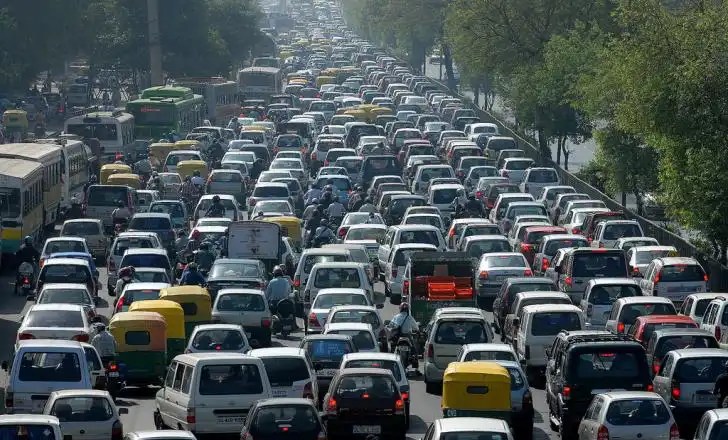
After decades commuting on New Delhi’s parlous roads, office worker Ashok Kumar spends more time than ever stuck in the gridlock that packs the Indian capital’s thoroughfares and pollutes the city.
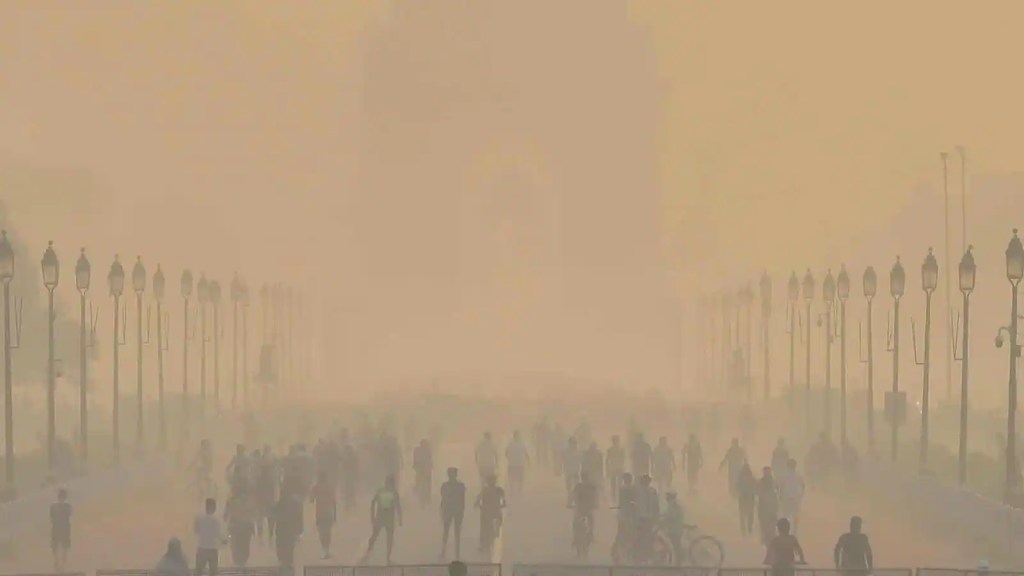
The sprawling megacity of 20 million people is regularly ranked the world’s most polluted capital, with traffic exhaust a main driver of the toxic smog that permeates the skies, especially in winter.
Delhi’s patchwork public transport network struggles to cater for a booming population, with long queues snaking outside the city’s underground metro stations each evening and overloaded buses inching their way down clogged arterials.
“When I came to Delhi, the air was clean because there were hardly any cars or bikes on the roads,” Kumar told AFP while waiting for a ride home outside the city’s main bus terminal.
Kumar spends nearly four hours each day in a “gruelling journey” to and from his home on Delhi’s far southern outskirts, alternating between commuter buses, private shared taxis and rickshaws.
Even at the age of 61, Kumar is hoping to save enough money to buy his own scooter and spare himself the pain of the daily commute.
“Not many people can afford to waste their time on public transport,” he said.
Private vehicle registrations have tripled in the last 15 years—there are now more than 13 million on the capital’s roads, government figures show.
The consequences are felt year-round, with Delhi road users spending 1.5 hours more in traffic than other major Asian cities, according to the Boston Consulting Group.
But come winter the daily inconvenience escalates into a full-blown public health crisis, as prevailing winds slow and the thick blanket of haze settles over the city sees a surge in hospital admissions from residents struggling to breathe.
Vehicle emissions accounted for more than half of the city air’s concentration of PM2.5—the smallest airborne particles most hazardous to human health—at the start of November, Delhi’s Centre for Science and Environment (CSE) said.
‘It made more sense’
A study from the centre last year showed the capital was experiencing a steady decline in public transit ridership.
Infrastructure has improved since the turn of the century, when Delhi inaugurated the first links in an underground rail network that now spans more than 250 stations and stretches into neighbouring satellite cities.
But the CSE said long distances between metro stops and residential areas was pushing commuters to switch to private vehicles.
“The Metro is convenient but I still had to take an auto-rickshaw or shared taxi from the station to my home,” Sudeep Mishra, 31, told AFP.
Mishra’s daily commute was a 50-kilometre (30-mile) return journey, including the two kilometres he had to navigate between the nearest station and his home—now all done on a second-hand motorbike.
“It was a hassle and expensive as well,” said Mishra, also a white-collar worker. “It made more sense to buy my vehicle to save time and money.”
Experts say this poor last mile connectivity is a particular issue for women, who often have to choose between private transport or risking a walk on dark and unsafe streets.
The move to private vehicles has seen Delhi’s bus network atrophy, with more than a hundred bus routes culled since 2009.
The state-run Delhi Transport Corporation’s fleet has shrunk by nearly half since a decade ago and last ordered new buses in 2008—with a planned expansion marred by corruption claims.
Cosmetic solutions
There is a direct link between this underinvestment in public transport and the capital’s worsening air pollution, said Sunil Dahiya, a New Delhi-based analyst with the Center for Research on Energy and Clean Air.
Official campaigns have attempted to lighten the haze in recent years, with the city at one point banning vehicles from the roads using an alternating odd-even system based on licence plate numbers.
Groups of youngsters are paid to stand at busy traffic intersections, waving placards urging drivers to turn off their ignitions while waiting at red lights.
And incentives have been offered for electric vehicle owners, but with only 145 charging stations across the city, take-up has been slow.
Dahiya told AFP that only a huge investment to make public transport more appealing and convenient would start to solve the intractable problem.
“We need aggressive growth in public transport to start seeing an absolute reduction in air pollution levels,” he said.
The rivers criss-crossing Earth are choking up and anthropogenic factors were found to be one of the prominent reasons, according to a new report. Agriculture, mining and dam construction emerged as some of the biggest contributors to this degradation.
The chemical composition of major rivers such as Yangtze, Amazon, Mississippi and Congo have been altered by natural and human activities, the study found.
Historical data analysis of runoff and solute concentration of 149 large rivers pointed out that higher volumes of calcium, potassium, chloride and bicarbonates are flowing through river basins and estuaries.
The concentration of total dissolved solids draining into oceans increased 68 per cent, chloride 81 per cent, sodium 86 per cent and sulfate (142 per cent) fluxes in almost a decade, according to the report published in Nature Communications journal October 12, 2021.
An international cohort of scientists from universities in China, the United States and the United Kingdom created a database of solute contents (some records maintained over a century) and analysed the same for almost 10 years.
The rivers observed included the Colorado and Mississippi (USA), the Amazon (South America), the Congo (Africa), the Rhine (Europe), the Yellow and Yangtse rivers (China) and the Murray (Australia).
The polar and tropical regions were the worst-affected because most of the urbanisation and agriculture were concentrated there. Weathering of rocks are also contributing factors.
These human activities, along with natural factors, cause seven river syndromes — salinisation, mineralisation, desalinisation, acidification, alkalisation, hardening and softening — that damage ecosystems.
“Acidification was also observed close to the equator as a result of bicarbonate levels vital for river health being present in the rivers of South America,” the researchers wrote in the report.
About 6,400 million tonnes of solutes reach the sea from rivers each year, the report stated.
It called for urgent mitigation measures to prevent solute concetrations from exceeding critical levels.
International study shows that freshwater polluted by fecal material can be determined more quickly and reliably using a new technique.
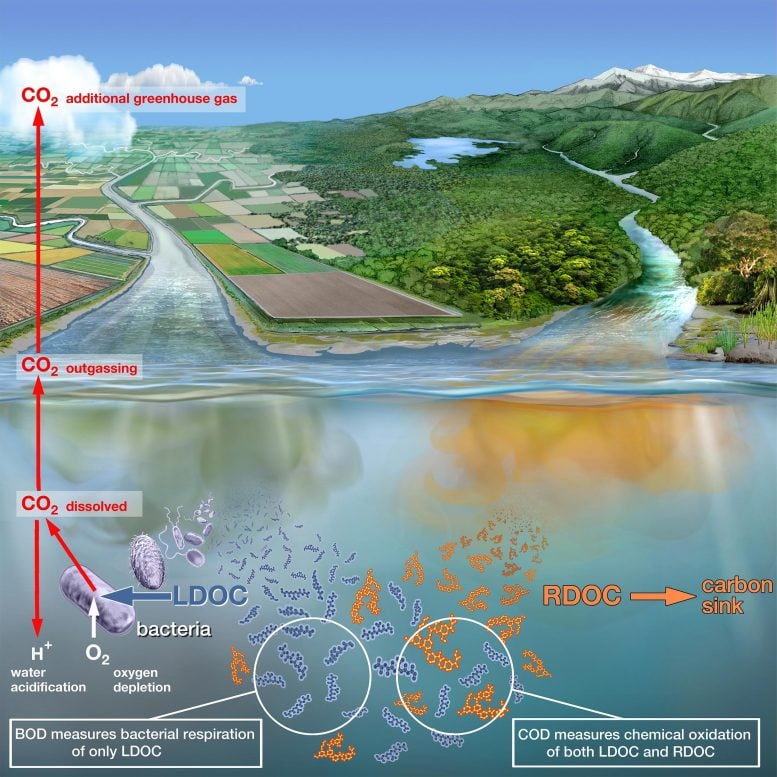
When wastewater from villages and cities flows into rivers and lakes, large quantities of fats, proteins, sugars and other carbon-containing, organic substances wind up in nature together with the fecal matter. These organic substances are broken down by bacteria that consume oxygen. The larger the volume of wastewater, the better the bacteria thrive. This, however, means the oxygen content of the water continues to decrease until finally the fish, mussels, or worms literally run out of air. This has created low-oxygen death zones in many rivers and lakes around the world.
No gold standard for measurements until now
In order to measure how heavily the waters are polluted with organic matter from feces, government bodies and environmental researchers regularly take water samples. One widely used measurement method uses a chemical reaction to determine the content of organic substances. As an international team of scientists now shows, this established method provides values from which the actual degree of the water pollution can hardly be derived. Prof. Helmuth Thomas, Director of Hereon’s Institute of Carbon Cycles is also a contributor to the study, which has now been published in the scientific journal Science Advances. “In the paper, we are therefore also introducing a new method for making the measurements much more reliable in the future,” he says.
Using the conventional measurement method, water samples are mixed with the chemicals permanganate or dichromate. These are especially reactive and break down all organic substances in a short time. The quantity of consumed permanganates or dichromates can then be used to determine how much organic substance was contained in the water sample.
Experts refer to this measurement as “chemical oxygen demand,” COD. The problem with the COD measurements is that they do not differentiate between the organic substances that wind up in the water with the sewage, and those that arise naturally — such as lignin and humic acids — which are released when wood decays. This means that the water pollution can hardly be distinguished from the natural content of organic substances.
“For the Han River in South Korea, for example, we have shown that the pollution with organic substances from wastewater in the past twenty-five years has decreased. The COD measurements, however, still show high values as they were before,” says Helmuth Thomas, “because here the natural substances make up a large portion of the organic matter in the water.”
Complicated biological analysis
But how can the actual pollution be measured more reliably? A biological measurement method has been established here for decades, but it is much more complex than the COD method and is therefore used more seldomly by government bodies and research institutions. In this case, a water sample is taken from the river or lake and the oxygen content of the water is measured as an initial value. Another “parallel sample” is immediately sealed airtight. Then this water sample rests for five days. During this time, the bacteria break down the organic substance, whereby they gradually consume the oxygen in the water. After five days, the container is opened and the oxygen is measured. If the water contains a great deal of organic matter, then the bacteria were particularly active. The oxygen consumption was then correspondingly high. Experts refer to the “biological oxygen demand” (BOD) in this measurement.
“The BOD measurement is far more precise than the COD because the bacteria preferentially break down the small organic molecules from the wastewater but leave the natural ones, such as lignin, untouched,” says Thomas. Nevertheless, the BOD measurement has its disadvantages, too. On the one hand, the BOD measurement takes five days, while the COD value is available after a few minutes. On the other, while filling, storing, and measuring the water samples, meticulous care must be taken to ensure that no oxygen from the ambient air winds up in the sample and falsifies the measurement value. “Only a few people with a great deal of laboratory experience have mastered how to entirely handle the BOD measurement,” says Thomas. “Therefore, government bodies and researchers even today still prefer the COD despite its greater uncertainties.”
Faster and more reliable method
Helmuth Thomas and his team are therefore introducing an alternative method that improves on the conventional BOD measurement. The advantage to the method is that only one water sample is necessary, which is immediately sealed and the oxygen consumption is measured without interfering with the sample. It is therefore unnecessary to open the sample after five days again to measure the oxygen content. This prevents the sample from coming into contact with atmospheric oxygen again.
With the new approach, an optical fiber is inserted into the sample vessel as soon as the water sample is filled. Through this fiber, the oxygen content can be continuously measured directly in the sample using optical effects. Thomas says, “We can measure the oxygen content non-stop and obtain a far more precise picture of the oxygen consumption by the bacteria.”
First tests have shown that a meaningful result is already available after about forty-eight hours, something that considerably accelerates the BOD measurement. All in all, the optical method makes the BOD measurements not only more reliable, but also faster. Helmuth Thomas assumes that the new method in the coming years therefore will be established as the new standard, which will replace both the COD as well as the classic BOD measurements. In the future, for example, it will be possible to determine more reliably than before whether water pollution control measures are actually successful.
After the lockdown due to Covid-19 in many countries, there was lesser travelling done by people, whether by cars, trains or flights. Even many industries were non-functional. This led to the significant decrease in air pollution, as there was a marked reduction in nitrous oxide emission.
Lockdown has decreased the fishingactivity, hence the fish biomass will increase. Even the sea turtles have been spotted returning to areas they once avoided to lay their eggs, all due to the lack of human interference.
Plants are growing better because there is cleaner air and water, yet again there is no human interference.
Less litter means lesser clogging of river systems, which is good in the long run for the environment.
In conclusion, though there has been a positive impact on the environment due to the lockdown, there is a fear that once people start travelling, all these positive impacts will soon disappear.




 BIOLOGY, ENVIRONMENT & MORE