Categories
Covid-19 environment

Let’s go BLUE for a COVID-19 recovery!!

“The ocean economy may be a victim of the impacts of the COVID-19 crisis, but it also holds solutions for rebuilding a more resilient, sustainable and equitable post-COVID world.”

– A Sustainable & Equitable Blue Recovery to the COVID-19 Crisis Report

Ocean and coastal habitats provide an essential workplace for the world’s small-scale fishers, and coastal communities rely on the ocean for jobs, food, health, and cultural traditions. In fact, the ocean economy adds approximately US$1.5 trillion in value globally (OECD 2016). But the COVID-19 pandemic disproportionally impacts the ocean economy and these communities, especially those from Small Island Developing States (SIDS).

new special report commissioned by the High-Level Panel for a Sustainable Ocean Economy (the Ocean Panel) recognizes the ocean economy’s vital role and the pandemic’s devastating impacts on ocean workers and the marine sector—and importantly, offers recovery solutions.

“A Sustainable and Equitable Blue Recovery to the COVID-19 Crisis”, as the name implies, recognizes the power of nature to help solve daunting global issues like climate change and pandemics. The report was released ahead of Climate Week NYC and a Rare-facilitated high-level roundtable meeting of coastal countries, where officials issued a joint message acknowledging the importance of the small-scale fishing sector to a blue (or green) recovery: that by implementing coastal and marine nature-based solutions, small-scale fishers can improve food security, nutrition, and the local economies of coastal nations, and enhance coastal resilience from climate change.

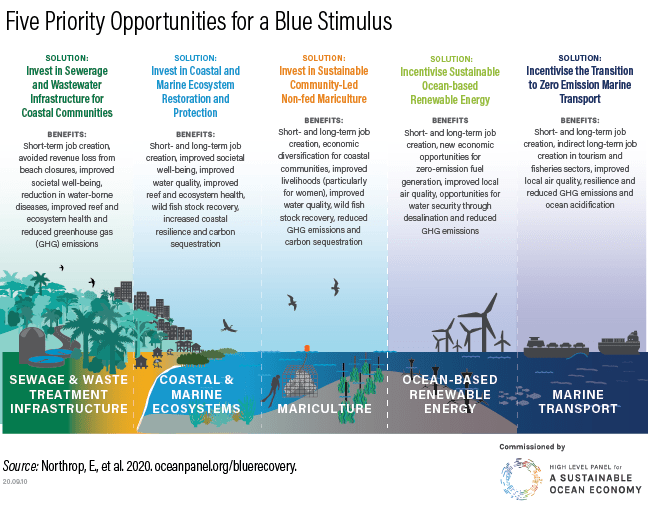
As a member of the Ocean Panel’s Advisory Network, Rare supports the five blue stimulus opportunities for government investment in COVID-19 crisis recovery outlined in the report. These proposed solutions deliver short-term relief to the economy and long-term economic, social, and environmental resilience. Moreover, they are considered a win-win for immediate assistance and forward-looking sustainable planning, known as a ‘no regrets’ investment strategy.

Fish Forever, Rare’s coastal fisheries program, prioritizes the report’s solution related to coastal and marine ecosystems: Invest in Coastal and Marine Ecosystem Restoration and Protection. Fish Forever uses behavioral insights to inspire fishing communities — fishers, fish buyers and traders, community members, and their local government — to adopt more responsible behaviors related to coastal fishing and implement nature-based solutions to protect their natural resources.

Investing in a nature-based solution like restoring and protecting coastal and marine ecosystems benefits coastal fishing households and their communities. This solution also has a host of benefits critical for a blue recovery, including the following five:

  1. Improves Food Security – Protecting coastal ecosystems supports ample fish resources and fish breeding habitat, which safeguards fishing communities by strengthening food security during times of crisis. Technology innovations, like Rare’s OurFish App referenced in the report, show how a nature-based approach to resource management benefits the community and improves food security: the app digitally helps to manage and understand fish stock and finance trends and enables fishing communities to monitor the value, type and local amount of fish caught.
  2. Enables Sound Financial and Household Decision-Making – Establishing Savings Clubs led by small-scale fishers empowers its members, often majority women, to manage their long-term household finances. It also raises awareness of the actions needed to enforce fish sanctuaries for coastal habitat protection and community livelihoods’ sustainability. This approach to behavior change “can powerfully affect the long-term strategy behind coastal fisheries conservation and the goal of ending overfishing,” as the report explains.
  3. Enhances Economic, Social, and Environmental Resilience – Investing in coastal and marine ecosystem restoration and protection can also expand job opportunities, such as protected areas enforcement officers, development planners, environmental engineers, and ecological restoration scientists. In addition to job security, nature-based solutions support the healthy natural resources that protect small-scale fishers’ livelihoods.
  4. Manages Natural Resources Sustainably – Ensuring coastal and marine ecosystem integrity further increases economic productivity by improving fisheries and tourism opportunities. Sustainable management also allows for more significant investment opportunities in blue carbon activities focused on climate mitigation and adaptation benefits from mangroves, seagrasses, and tidal salt marshes.
  5. Builds Community Pride – Stakeholder engagement and collaboration with public and private sectors, including small-scale fishers and their families, are critical for building pride in and ownership of more sustainable behaviors and community-based programs. Co-owning and managing natural resources and ensuring the inclusion of women and Indigenous communities has also demonstrated long-lasting benefits and delivers on many of the UN’s sustainable development goals.

Farmers and fishers rely on healthy ecosystems and strong local governance and management to thrive. Building back better from the impacts of COVID-19 will require a global blue recovery effort that not only prioritizes nature-based solutions but empowers coastal communities and their leaders to champion blue solutions.
BLUE solutions for COVID-19 recovery

Categories
environment

“Cocktail “: The plastic eating enzyme

The scientists behind re-engineering of the plastic-guzzling enzyme PETase have now gone a step further. These scientists have created an enzyme medley, which is up to six times faster to digest plastic.

Another enzyme, found in the same rubbish dwelling bacterium like PETase, has been combined with the latter to speed up the disintegration of plastic. PETase disintegrates polyethylene terephthalate into its building blocks. This creates an opportunity to reprocess plastic infinitely and reduce greenhouse gases and plastic pollution driving climate change.

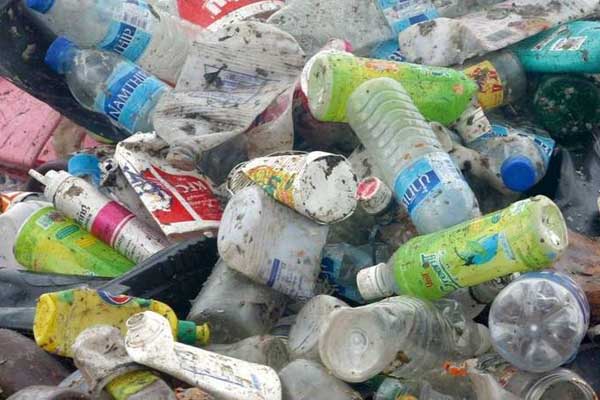
Meanwhile, PET is the commonly used thermoplastic to make clothing, carpets, and single-use drink bottles. It takes hundreds of years for PET to disintegrate in the environment, but PETase can reduce this process to days.

Discovery of Plastic-eating PETase first step in Plastic Recycling revolution

With the discovery of PETase, it set up the prospect of a revolution in plastic recycling, thereby creating a potential low-energy solution to deal with plastic waste. To establish this, the natural PETase enzyme engineered in the laboratory featured to be almost 20 percent faster at disintegrating PET.

Going further, the same team of scientists have combined PETase and a second enzyme MHETase, for much bigger improvements. The mixing of PETase and MHETase doubled the speed of breakdown of PET, and designing a connection between the two enzymes created a super-enzyme, which further increased the speed of the activity by three times.

The study published in the journal Proceedings of the National Academy of Sciences was co-led by scientists who engineered PETase.

“In the natural phenomenon, PETase attacks the surface of the plastic and MHETase chops it further. Likewise, for it seemed natural if the two enzymes could be used together, to mimic the natural phenomenon,” opine the associates of the study

Categories
environment

Volcano discovery: Major eruptions could be a havoc to the climate

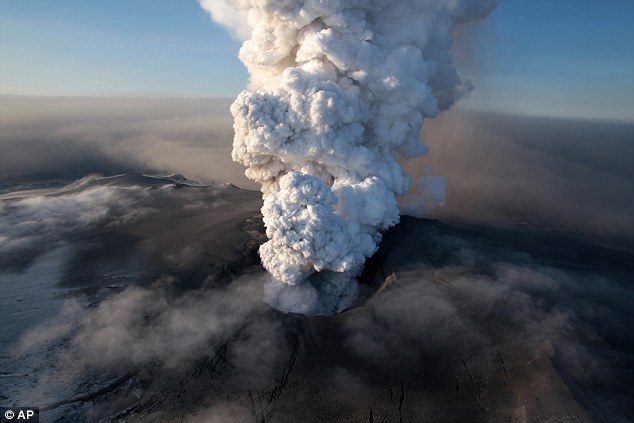
When volcanoes erupt, these geologic monsters produce tremendous clouds of ash and dust — plumes that can blacken the sky, shut down air traffic and reach heights of roughly 25 miles above Earth’s surface.

A new study led by the University of Colorado Boulder suggests that such volcanic ash may also have a larger influence on the planet’s climate than scientists previously suspected.

The new research, published in the journal Nature Communications, examines the eruption of Mount Kelut (or Kelud) on the Indonesian island of Java in 2014. Drawing on real-world observations of this event and advanced computer simulations, the team discovered that volcanic ash seems to be prone to loitering — remaining in the air for months or even longer after a major eruption.

“What we found for this eruption is that the volcanic ash can persist for a long time,” said Yunqian Zhu, lead author of the new study and a research scientist at the Laboratory for Atmospheric and Space Physics (LASP) at CU Boulder.

Lingering ash

The discovery began with a chance observation: Members of the research team had been flying an unmanned aircraft near the site of the Mount Kelut eruption — an event that covered large portions of Java in ash and drove people from their homes. In the process, the aircraft spotted something that shouldn’t have been there.

“They saw some large particles floating around in the atmosphere a month after the eruption,” Zhu said. “It looked like ash.”

She explained that scientists have long known that volcanic eruptions can take a toll on the planet’s climate. These events blast huge amounts of sulfur-rich particles high into Earth’s atmosphere where they can block sunlight from reaching the ground.

Researchers haven’t thought, however, that ash could play much of a role in that cooling effect. These chunks of rocky debris, scientists reasoned, are so heavy that most of them likely fall out of volcanic clouds not long after an eruption.

Zhu’s team wanted to find out why that wasn’t the case with Kelut. Drawing on aircraft and satellite observations of the unfolding disaster, the group discovered that the volcano’s plume seemed to be rife with small and lightweight particles of ash — tiny particles that were likely capable of floating in the air for long periods of time, much like dandelion fluff.

“Researchers have assumed that ash is similar to volcanic glass,” Zhu said. “But what we’ve found is that these floating ones have a density that’s more like pumice.”

Disappearing molecules

Study coauthor Brian Toon added that these pumice-like particles also seem to shift the chemistry of the entire volcanic plume.

Toon, a professor in LASP and the Department of Atmospheric and Oceanic Sciences at CU Boulder, explained that erupting volcanos spew out a large amount of sulfur dioxide. Many researchers previously assumed that those molecules interact with others in the air and convert into sulfuric acid — a series of chemical reactions that, theoretically, could take weeks to complete. Observations of real-life eruptions, however, suggest that it happens a lot faster than that.

“There has been a puzzle of why these reactions occur so fast,” Toon said.

He and his colleagues think they’ve discovered the answer: Those molecules of sulfur dioxide seem to stick to the particles of ash floating in the air. In the process, they may undergo chemical reactions on the surface of the ash itself — potentially pulling around 43% more sulfur dioxide out of the air.

Ash, in other words, may hasten the transformation of volcanic gases in the atmosphere.

Just what the impact of those clouds of ash are on the climate isn’t clear. Long-lasting particles in the atmosphere could, potentially, darken and even help to cool the planet after an eruption. Floating ash might also blow all the way from sites like Kelut to the planet’s poles. There, it could kickstart chemical reactions that would damage Earth’s all-important ozone layer.

But the researchers say that one thing is clear: When a volcano blows, it may be time to pay a lot more attention to all that ash and its true impact on Earth’s climate.

“I think we’ve discovered something important here,” Toon said. “It’s subtle, but it could make a big difference.”

Categories
environment

Earth’s Atmosphere ‘Rings’ like a Bell

According to a new study published in the Journal of the Atmospheric Sciences, by the scientists at the University of Hawai’i at Manoa and Kyoto University, the Earth’s entire atmosphere vibrates much like a ringing bell – “a low-pitched fundamental tone alongside higher-pitched overtones.”

In the water, waves are produced by passing energy. Energy moving through the skies-from things like heat-produced pressure to the gravitational pull of celestial bodies-also creates waves.

The atmospheric waves don’t slosh around the same way ocean waves do, but they are still recognisable if one knows what to look for : moving pockets of more tightly packed air, thousands of kilometres long. The waves of atmospheric pressure spans the globe and travels around the equator, some moving east to west and others west to east. Each of these waves is a resonant vibration of the global atmosphere, analogous to one of the resonant pitches of a bell.

The discovery of these theories of atmospheric circulation will help scientists better predict weather patterns and understand the makeup of our atmosphere.

Categories
Covid-19 environment

Covid-19 and our Environment

After the lockdown due to Covid-19 in many countries, there was lesser travelling done by people, whether by cars, trains or flights. Even many industries were non-functional. This led to the significant decrease in air pollution, as there was a marked reduction in nitrous oxide emission.

Lockdown has decreased the fishing activity, hence the fish biomass will increase. Even the sea turtles have been spotted returning to areas they once avoided to lay their eggs, all due to the lack of human interference.

Plants are growing better because there is cleaner air and water, yet again there is no human interference.

Less litter means lesser clogging of river systems, which is good in the long run for the environment.

In conclusion, though there has been a positive impact on the environment due to the lockdown, there is a fear that once people start travelling, all these positive impacts will soon disappear.

Categories
environment

WHAT IS ENVIRONMENT???

The word ‘environment’ refers to the conditions, which is surrounding the ecosystem or the community of living things. What we see,feel. breathe, eat constitutes the environment. The environment supports our lives and the lives of the other species. All living beings need a healthy environment to live a healthy life.

It is the environment that regulates and maintains all biological cycles. Since time immemorial, the growth and evolution of all living forms have taken place with the help of environment.

The food chain, food webs, photosynthesis, greenhouse effect, absorption of UV rays by ozone layer, nitrogen cycle, oxygen cycle etc. are the key environmental processes behind the survival of all species.

Design a site like this with WordPress.com
Get started