Categories
Biology human body

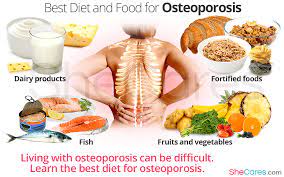
Foods in osteoporosis

Eating a healthy diet rich in essential nutrients such as calcium, vitamin D, and protein can help reduce the risk of osteoporosis. In addition, limiting caffeine and alcohol intake may be beneficial for bone health, especially among older adults.

Worldwide, 1 in 3 females and 1 in 5 males over the age of 50 will be affected by a broken bone due to osteoporosis, and osteoporosis or low bone mass affects 54%Trusted Source of Americans.

A person’s diet can affect bone health, so people must consider nutrition to maintain their bone mass.

This article discusses how nutrients affect the bones and which foods are best to eat and avoid.

How diet affects bone health

Bone does not remain static throughout life — it is constantly breaking down and rebuilding as part of normal bone metabolism.

Two main types of cellsTrusted Source, osteoblasts and osteoclasts, participate in this process. Osteoblasts form new bone, while osteoclasts break down old bone in a process called resorption.

However, if bone metabolism becomes unbalanced, bones can become less dense, weaker, and brittle. As a result, a doctor may diagnose low bone mass or osteoporosis.

Several factorsTrusted Source can cause bone loss, including aging, menopause, and certain medications.

Moreover, consuming key nutrients for bone health can help to reduce the risk of osteoporosis and keep bones healthy.

Individuals should ensure to include the following nutrients and foods in their diet to keep bones healthy:

Calcium 

The National Institute of Arthritis and Musculoskeletal and Skin Diseases advises that low calcium intake throughout life has an association with low bone mass and high fracture rates.

From 51 years, females require 1,200 milligrams (mg) of calcium daily, and males need 1,000 mg.

People can ensure they consume calcium by including dairy or soy products, fish with bones, and leafy green vegetables in their diets.

The following shows the calcium content of some common foods:

  • fortified oatmeal, packet: 350 mg calcium
  • sardines, canned in oil, with edible bones, 3 ounces (oz): 324 mg calcium
  • cheddar cheese, 1.5 oz, shredded: 306 mg calcium
  • milk, nonfat, 1 cup: 302 mg calcium
  • tofu, firm, with calcium, 0.5 cup: 204 mg calcium
  • orange juice, fortified with calcium, 6 oz: 200–260 mg calcium
  • baked beans, 1 cup: 142 mg calcium

Vitamin D

The body needs vitamin D to absorb calcium, and a deficiency of vitamin D could cause the weakening of the bones and skeleton.

Experts recommend that individuals up to 70 years have a daily intake of 600 IU (International Units) of vitamin D.

People over age 70 should increase their uptake to 800 IU daily, which they can also obtain from supplements.

People can get vitamin D from sunlight and food. The following foodsTrusted Source contain vitamin D:

  • egg yolks
  • oily fish such as salmon, trout, mackerel, and tuna
  • beef liver
  • cheese
  • mushrooms that producers have treated with UV light
  • milk, margarine, orange juice, and cereals that manufacturers have fortified with vitamin D

Protein

Research suggests that protein can be both beneficial and detrimental to bone health, as different studies have produced different results on the effects of protein on bone health.

However, according to the Framingham OsteoporosisTrusted Source study, there is a link between low protein intake and greater bone loss and hip fractures in older adults.

The study concluded that the combination of sufficient protein and calcium intake appears to benefit bone mineral density (BMD).

Therefore, eating a diet with sufficient protein and calcium seems wise. Protein-rich foods include:

Micronutrients and antioxidants in fruits and vegetables

The Framingham Osteoporosis Study identified that people with a higher fruit and vegetable intake had better BMD and less bone loss.

The nutrients in fruits and vegetables that the study indicated are beneficial to bone health includeTrusted Source:

2017 cross-sectional studyTrusted Source of Chinese people aged 40–75 years found that a higher fruit and vegetable intake correlates with higher BMD and lowers the risk of osteoporosis.

Additionally, a 2019 meta-analysisTrusted Source found moderate-quality evidence that increasing a person’s fruit and vegetable intake by at least one serving per day decreases the risk of fractures.

Foods to limit or avoid

In addition to eating a healthy diet to support bone health, people should be aware of some detrimental foods and drinks.

Salt

According to the National Institute of Arthritis and Musculoskeletal and Skin Diseases, overconsumption of salt can cause the kidneys to excrete calcium.

Therefore, people who have a low calcium intake should avoid adding salt to food or eating too many processed foods that can contain excess salt.

Foods containing oxalates and phytates

The Bone Health and Osteoporosis Foundation advises that some substances in food can interfere with the body’s ability to absorb calcium.

These include phytates in beans, wheat bran, and legumes and oxalates in spinach and beets. Soaking and cooking these foods can help to reduce these compounds.

Alcohol

Experts advise that alcohol negatively affects bone health for several reasons.

Firstly, drinking excessive alcohol can interfere with the body’s absorption of calcium and vitamin D.

In addition, chronic heavy drinking can disrupt hormones, such as elevating cortisol levels, which can break down more bone. Males may produce less testosterone, a hormone that has links to bone formation, while females may notice irregular menstrual cycles. Irregular menstrual cycles can reduce the amount of estrogen in the body, which increases the risk of osteoporosis.

Moreover, people under the influence of alcohol are more at risk of falls and bone fractures.

Caffeine

A 2021 study found that 800 mg of caffeine consumed in 6 hours increased the clearance of calcium by the kidneys by 77%Trusted Source.

An older studyTrusted Source suggests that as coffee may increase the amount of calcium the body excretes in urine, people should not drink more than three cups per day, especially if they are older.

Additionally, the Bone Health and Osteoporosis Foundation advises that caffeine in soft drinks such as colas can have the same adverse effects.

Learn 11 ways to increase bone density naturally.

Summary

To protect bones throughout life, people should eat a healthy diet containing essential nutrients and engage in physical activity.

Calcium, vitamin D, and protein are vital protective nutrients and vitamins, minerals, and antioxidants in fruit and vegetables.

Older adults may wish to limit coffee to three cups per day and avoid excessive alcohol.

Avoiding excessive alcohol and salt may be beneficial for everyone for overall health and well-being, especially those who have limited calcium intake.
Categories
Biology human body

Bone & protein

Nutrition and bone health are intertwined, so careful consideration should be given to your diet. While calcium and vitamin D are well known contributors to bone health, there is another big player when it comes to healthy bones and that’s protein. Adequate dietary protein is essential for bone health throughout one’s life.  It is needed to gain bone mass during childhood and adolescence, and is also needed to maintain bone mass with ageing.

Why is Dietary Protein Important?

Protein makes up approximately 50% of the volume of your bone, and about 33% of its mass. The bone protein matrix continually undergoes a process of remodeling. During the remodeling phase, cross-linking of collagen molecules in the bone results in modification of the amino acids, and many of the collagen fragments that are released during this process cannot be used to build new bone matrix. Therefore, an adequate supply of dietary protein is needed daily for the maintenance of your bones.

In addition to providing structural integrity to the bone matrix, protein plays a variety of other roles including increasing insulin-like growth factor-1 (IGF-1), which is a key mediator of bone health, increasing intestinal calcium absorption, suppressing parathyroid hormone, and improving muscle strength and mass. All of these factors may help to improve the health of your skeleton.

Sources of Protein

Research has found that plant versus animal proteins do not seem to differ in their ability to prevent bone loss (it should be noted that research studies in this particular area are limited). The Recommended Dietary Allowance (RDA) is 0.8 grams of protein for each kilogram of body weight. Keep in mind that this is the minimum level that you should consume to meet basic nutritional requirements. The current Dietary Guidelines for Americans suggest that between 10% and 35% of your daily calories should come from protein sources.  A variety of food options provide an excellent source of protein, including both animal and vegetable sources.

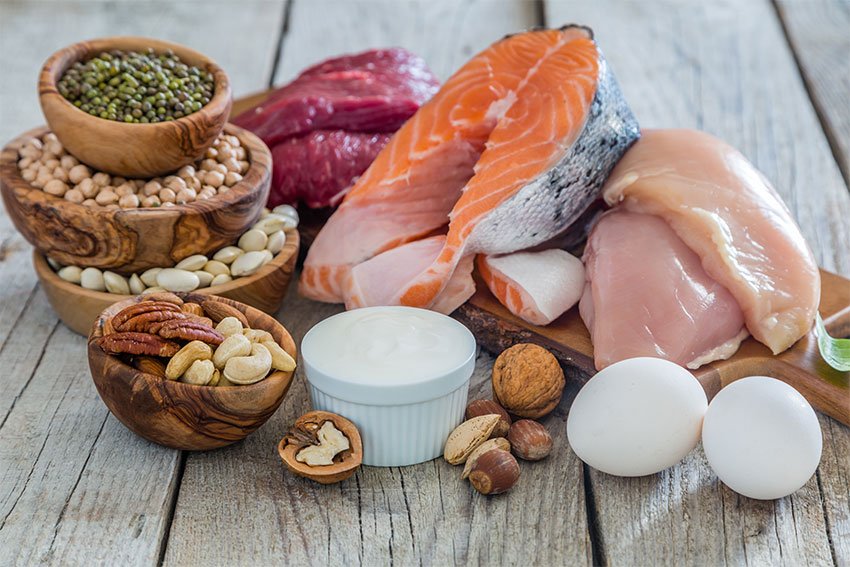
Good animal sources of protein include:

  • Lean cuts of red meat: grass-fed beef (top sirloin/eye of round/top round), bison
  • Poultry: pasture-raised boneless, skinless chicken or turkey breast
  • Fish: wild-caught Alaskan salmon, albacore or yellowfin tuna, rainbow trout
  • Shellfish: shrimp, oysters, scallops
  • Eggs (pasture-raised)
  • Dairy: cottage cheese, Greek yogurt

Good vegetable sources of protein include:

  • Lentils & Beans: kidney beans, pinto beans, black beans, Lima beans, split peas
  • Soy products: tempeh, organic tofu, edamame
  • Grains: quinoa, whole wheat pasta, brown rice, and oatmeal
  • Nuts: unsalted raw or dry roasted varieties such as almonds, cashews, pistachios
  • Seeds: sunflower, sesame, chia, flax & hemp seeds
  • Spirulina

The beneficial effects of dietary protein are most prominent when there is an adequate supply of both calcium and vitamin D. To ensure that you have strong, healthy bones throughout your life, ensure that you are consuming enough calcium and dietary protein and getting enough vitamin D too.

Categories
Biology human body Uncategorized

AI breakthrough could spark medical revolution

There are around 20,000 of these proteins expressed by the human genome. Collectively, biologists refer to this full complement as the “proteome”.

Commenting on the results from AlphaFold, Dr Demis Hassabis, chief executive and co-founder of artificial intelligence company Deep Mind, said: “We believe it’s the most complete and accurate picture of the human proteome to date.

“We believe this work represents the most significant contribution AI has made to advancing the state of scientific knowledge to date.

“And I think it’s a great illustration and example of the kind of benefits AI can bring to society.” He added: “We’re just so excited to see what the community is going to do with this.”

Proteins are made up of chains of smaller building blocks called amino acids. These chains fold in myriad different ways, forming a unique 3D shape. A protein’s shape determines its function in the human body.

The 350,000 protein structures predicted by AlphaFold include not only the 20,000 contained in the human proteome, but also those of so-called model organisms used in scientific research, such as E. coli, yeast, the fruit fly and the mouse.

This giant leap in capability is described by DeepMind researchers and a team from the European Molecular Biology Laboratory (EMBL) in the prestigious journal Nature.

AlphaFold was able to make a confident prediction of the structural positions for 58% of the amino acids in the human proteome.

The positions of 35.7% were predicted with a very high degree of confidence – double the number confirmed by experiments.

Traditional techniques to work out protein structures include X-ray crystallography, cryogenic electron microscopy (Cryo-EM) and others. But none of these is easy to do: “It takes a huge amount of money and resources to do structures,” Prof John McGeehan, a structural biologist at the University of Portsmouth, told BBC News.

Therefore, the 3D shapes are often determined as part of targeted scientific investigations, but no project until now had systematically determined structures for all the proteins made by the body.

In fact, just 17% of the proteome is covered by a structure confirmed experimentally.

Commenting on the predictions from AlphaFold, Prof McGeehan said: “It’s just the speed – the fact that it was taking us six months per structure and now it takes a couple of minutes. We couldn’t really have predicted that would happen so fast.”

“When we first sent our seven sequences to the DeepMind team, two of those we already had the experimental structures for. So we were able to test those when they came back. It was one of those moments – to be honest – where the hairs stood up on the back of my neck because the structures [AlphaFold] produced were identical.”

Prof Edith Heard, from EMBL, said: “This will be transformative for our understanding of how life works. That’s because proteins represent the fundamental building blocks from which living organisms are made.”

“The applications are limited only by our understanding.”

Those applications we can envisage now include developing new drugs and treatments for disease, designing future crops that can resist climate change, and enzymes that can break down the plastic that pervades the environment.

Prof McGeehan’s group is already using AlphaFold’s data to help develop faster enzymes for degrading plastic. He said the program had provided predictions for proteins of interest whose structures could not be determined experimentally – helping accelerate their project by “multiple years”.

Dr Ewan Birney, director of EMBL’s European Bioinformatics Institute, said the AlphaFold predicted structures were “one of the most important datasets since the mapping of the human genome”.

DeepMind has teamed up with EMBL to make the AlphaFold code and protein structure predictions openly available to the global scientific community.

Dr Hassabis said DeepMind planned to vastly expand the coverage in the database to almost every sequenced protein known to science – over 100 million structures.

Researchers Create High-Stringency Blueprint of Human Proteome | Genetics |  Sci-News.com
Design a site like this with WordPress.com
Get started