Categories
Biology human body

Foods in osteoporosis

Eating a healthy diet rich in essential nutrients such as calcium, vitamin D, and protein can help reduce the risk of osteoporosis. In addition, limiting caffeine and alcohol intake may be beneficial for bone health, especially among older adults.

Worldwide, 1 in 3 females and 1 in 5 males over the age of 50 will be affected by a broken bone due to osteoporosis, and osteoporosis or low bone mass affects 54%Trusted Source of Americans.

A person’s diet can affect bone health, so people must consider nutrition to maintain their bone mass.

This article discusses how nutrients affect the bones and which foods are best to eat and avoid.

How diet affects bone health

Bone does not remain static throughout life — it is constantly breaking down and rebuilding as part of normal bone metabolism.

Two main types of cellsTrusted Source, osteoblasts and osteoclasts, participate in this process. Osteoblasts form new bone, while osteoclasts break down old bone in a process called resorption.

However, if bone metabolism becomes unbalanced, bones can become less dense, weaker, and brittle. As a result, a doctor may diagnose low bone mass or osteoporosis.

Several factorsTrusted Source can cause bone loss, including aging, menopause, and certain medications.

Moreover, consuming key nutrients for bone health can help to reduce the risk of osteoporosis and keep bones healthy.

Individuals should ensure to include the following nutrients and foods in their diet to keep bones healthy:

Calcium 

The National Institute of Arthritis and Musculoskeletal and Skin Diseases advises that low calcium intake throughout life has an association with low bone mass and high fracture rates.

From 51 years, females require 1,200 milligrams (mg) of calcium daily, and males need 1,000 mg.

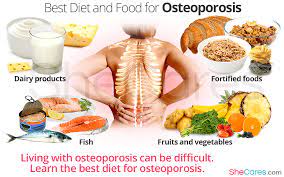
People can ensure they consume calcium by including dairy or soy products, fish with bones, and leafy green vegetables in their diets.

The following shows the calcium content of some common foods:

  • fortified oatmeal, packet: 350 mg calcium
  • sardines, canned in oil, with edible bones, 3 ounces (oz): 324 mg calcium
  • cheddar cheese, 1.5 oz, shredded: 306 mg calcium
  • milk, nonfat, 1 cup: 302 mg calcium
  • tofu, firm, with calcium, 0.5 cup: 204 mg calcium
  • orange juice, fortified with calcium, 6 oz: 200–260 mg calcium
  • baked beans, 1 cup: 142 mg calcium

Vitamin D

The body needs vitamin D to absorb calcium, and a deficiency of vitamin D could cause the weakening of the bones and skeleton.

Experts recommend that individuals up to 70 years have a daily intake of 600 IU (International Units) of vitamin D.

People over age 70 should increase their uptake to 800 IU daily, which they can also obtain from supplements.

People can get vitamin D from sunlight and food. The following foodsTrusted Source contain vitamin D:

  • egg yolks
  • oily fish such as salmon, trout, mackerel, and tuna
  • beef liver
  • cheese
  • mushrooms that producers have treated with UV light
  • milk, margarine, orange juice, and cereals that manufacturers have fortified with vitamin D

Protein

Research suggests that protein can be both beneficial and detrimental to bone health, as different studies have produced different results on the effects of protein on bone health.

However, according to the Framingham OsteoporosisTrusted Source study, there is a link between low protein intake and greater bone loss and hip fractures in older adults.

The study concluded that the combination of sufficient protein and calcium intake appears to benefit bone mineral density (BMD).

Therefore, eating a diet with sufficient protein and calcium seems wise. Protein-rich foods include:

Micronutrients and antioxidants in fruits and vegetables

The Framingham Osteoporosis Study identified that people with a higher fruit and vegetable intake had better BMD and less bone loss.

The nutrients in fruits and vegetables that the study indicated are beneficial to bone health includeTrusted Source:

2017 cross-sectional studyTrusted Source of Chinese people aged 40–75 years found that a higher fruit and vegetable intake correlates with higher BMD and lowers the risk of osteoporosis.

Additionally, a 2019 meta-analysisTrusted Source found moderate-quality evidence that increasing a person’s fruit and vegetable intake by at least one serving per day decreases the risk of fractures.

Foods to limit or avoid

In addition to eating a healthy diet to support bone health, people should be aware of some detrimental foods and drinks.

Salt

According to the National Institute of Arthritis and Musculoskeletal and Skin Diseases, overconsumption of salt can cause the kidneys to excrete calcium.

Therefore, people who have a low calcium intake should avoid adding salt to food or eating too many processed foods that can contain excess salt.

Foods containing oxalates and phytates

The Bone Health and Osteoporosis Foundation advises that some substances in food can interfere with the body’s ability to absorb calcium.

These include phytates in beans, wheat bran, and legumes and oxalates in spinach and beets. Soaking and cooking these foods can help to reduce these compounds.

Alcohol

Experts advise that alcohol negatively affects bone health for several reasons.

Firstly, drinking excessive alcohol can interfere with the body’s absorption of calcium and vitamin D.

In addition, chronic heavy drinking can disrupt hormones, such as elevating cortisol levels, which can break down more bone. Males may produce less testosterone, a hormone that has links to bone formation, while females may notice irregular menstrual cycles. Irregular menstrual cycles can reduce the amount of estrogen in the body, which increases the risk of osteoporosis.

Moreover, people under the influence of alcohol are more at risk of falls and bone fractures.

Caffeine

A 2021 study found that 800 mg of caffeine consumed in 6 hours increased the clearance of calcium by the kidneys by 77%Trusted Source.

An older studyTrusted Source suggests that as coffee may increase the amount of calcium the body excretes in urine, people should not drink more than three cups per day, especially if they are older.

Additionally, the Bone Health and Osteoporosis Foundation advises that caffeine in soft drinks such as colas can have the same adverse effects.

Learn 11 ways to increase bone density naturally.

Summary

To protect bones throughout life, people should eat a healthy diet containing essential nutrients and engage in physical activity.

Calcium, vitamin D, and protein are vital protective nutrients and vitamins, minerals, and antioxidants in fruit and vegetables.

Older adults may wish to limit coffee to three cups per day and avoid excessive alcohol.

Avoiding excessive alcohol and salt may be beneficial for everyone for overall health and well-being, especially those who have limited calcium intake.
Categories
Biology Evolution human body

Osteoporosis and Menopause

Osteoporosis is a disease that weakens bones, increasing the risk of sudden and unexpected fractures. Literally meaning “porous bone,” osteoporosis results in an increased loss of bone mass and strength. The disease often progresses without any symptoms or pain.

Many times, osteoporosis is not discovered until weakened bones cause painful fractures usually in the back or hips. Unfortunately, once you have a broken bone due to osteoporosis, you are at high risk of having another. And these fractures can be debilitating. Fortunately, there are steps you can take to help prevent osteoporosis from ever occurring. And treatments can slow the rate of bone loss if you already have osteoporosis.

What Causes Osteoporosis?

Though we do not know the exact 

of osteoporosis, we do know how the disease develops. Your bones are made of living, growing tissue. An outer shell of cortical or dense bone encases trabecular bone, a sponge-like bone. When a bone is weakened by osteoporosis, the “holes” in the “sponge” grow larger and more numerous, weakening the internal structure of the bone.

Until about age 30, people normally build more bone than they lose. During the aging process, bone breakdown begins to outpace bone buildup, resulting in a gradual loss of bone mass. Once this loss of bone reaches a certain point, a person has osteoporosis.

How Is Osteoporosis Related to Menopause?

There is a direct relationship between the lack of estrogen during perimenopause and menopause and the development of osteoporosis. Early menopause (before age 45) and any prolonged periods in which hormone levels are low and menstrual periods are absent or infrequent can cause loss of bone mass.

Until about age 30, people normally build more bone than they lose. During the aging process, bone breakdown begins to outpace bone buildup, resulting in a gradual loss of bone mass. Once this loss of bone reaches a certain point, a person has osteoporosis.

What Are the Symptoms of Osteoporosis?

Osteoporosis is often called a “silent disease” because initially bone loss occurs without symptoms. People may not know that they have osteoporosis until their bones become so weak that a sudden strain, bump, or fall causes a fracture or a vertebra to collapse. Collapsed vertebrae may initially be felt or seen in the form of severe back pain, loss of height, or spinal deformities such as stooped posture.

Who Gets Osteoporosis?

Important risk factors for osteoporosis include:

  • Age. After maximum bone density and strength is reached (generally around age 30), bone mass begins to naturally decline with age.
  • Gender. Women over the age of 50 have the greatest risk of developing osteoporosis. In fact, women are four times more likely than men to develop osteoporosis. Women’s lighter, thinner bones and longer life spans account for some of the reasons why they are at a higher risk for osteoporosis.
  • Ethnicity. Research has shown that Caucasian and Asian women are more likely to develop osteoporosis. Additionally, hip fractures are twice as likely to occur in Caucasian women as in African-American women. However, women of color who fracture their hips have a higher mortality.
  • Bone structure and body weight. Petite and thin women have a greater risk of developing osteoporosis in part because they have less bone to lose than women with more body weight and larger frames. Similarly, small-boned, thin men are at greater risk than men with larger frames and more body weight.
  • Family history. Heredity is one of the most important risk factors for osteoporosis. If your parents or grandparents have had any signs of osteoporosis, such as a fractured hip after a minor fall, you may be at greater risk of developing the disease.
  • Prior history of fracture/bone breakage.
  • Certain medications. The use of some medications, such as the long term use of steroids (like prednisone) can also increase your risk of developing osteoporosis.
  • Some medical conditions: Some diseases including cancer and stroke may increase your risk for osteoporosis.

How Do I Know if I Have Osteoporosis?

A painless and accurate test can provide information about bone health and osteoporosis before problems begin. Bone mineral density (BMD) tests, or bone measurements, are X-rays that use very small amounts of radiation to determine bone strength.

bone mineral density test is indicated for:

  • Women age 65 and older.
  • Women with numerous risk factors.
  • Menopausal women who have had fractures

How Is Osteoporosis Treated?

Treatments for established osteoporosis (meaning, you already have osteoporosis) include:

  • Medications such as alendronate (Binosto, Fosamax), ibandronate (Boniva), raloxifene (Evista), risedronate (Actonel, Atevia), and zoledronic acid (Reclast, Zometa)
  • Calcium and vitamin D supplements.
  • Weight-bearing exercises (which make your muscles work against gravity)
  • Injectable abaloparatide (Tymlos), teriparatide (Forteo) or PTH to rebuild bone
  • Injectable denosumab (Prolia, Xgeva) for women at high risk of fracture when other drugs don’t work
  • Hormone therapy

Is There a Safe Alternative to Hormone Therapy?

Alternatives to hormone therapy include:

  • Bisphosphonates. This group of medications includes the drugs alendronate (Binosto, Fosamax), risedronate (Actonel, Atelvia), ibandronate (Boniva) and zoledronic acid (Reclast, Zometa). Bisphosphonates are used to prevent and/or treat osteoporosis. All can help prevent spine fractures. Binosto, Fosamax,  Actonel, Atelvia, Reclast and Zometa can also reduce the risk of hip and other non-spine fractures.
  • Raloxifene (Evista). This drug is a selective estrogen receptor modulator (SERM) that has many estrogen-like properties. It is approved for prevention and treatment of osteoporosis and can prevent bone loss at the spine, hip, and other areas of the body. Studies have shown that it can decrease the rate of vertebral fractures by 30%-50%. It may increase the risk of blood clots.
  • Teriparatide (Forteo) and abaloparatide (Tymlos), are a type of hormone used to treat osteoporosis. They help rebuild bone and increase bone mineral density. They are given by injection and are used as a treatment for osteoporosis.
  • Denosumab (Prolia, Xgeva) is a so-called monoclonal antibody — a fully human, lab-produced antibody that inactivates the body’s bone-breakdown mechanism. It is used to treat women at high risk of fracture when other osteoporosis drugs have not worked.

How Can I Prevent Osteoporosis?

There are multiple ways you can help protect yourself against osteoporosis, including:

  • Exercise. Establish a regular exercise program. Exercise makes bones and muscles stronger and helps prevent bone loss. It also helps you stay active and mobile. Weight-bearing exercises, done at least three to four times a week, are best for preventing osteoporosis. Walking, jogging, playing tennis, and dancing are all good weight-bearing exercises. In addition, strength and balance exercises may help you avoid falls, decreasing your chance of breaking a bone.
  • Eat foods high in calcium. Getting enough calcium throughout your life helps to build and keep strong bones. The U.S. recommended daily allowance (RDA) of calcium for adults with a low-to-average risk of developing osteoporosis is 1,000 mg (milligrams) each day. For those at high risk of developing osteoporosis, such as postmenopausal women and men, the RDA increases up to 1,200 mg each day. Excellent sources of calcium are milk and dairy products (low-fat versions are recommended), canned fish with bones like salmon and sardines, dark green leafy vegetables, such as kale, collards and broccoli, calcium-fortified orange juice, and breads made with calcium-fortified flour.
  • Supplements. If you think you need to take a supplement to get enough calcium, check with your doctor first. Calcium carbonate and calcium citrate are good forms of calcium supplements. Be careful not to get more than 2,000 mg of calcium a day if you are 51 or older. Younger adults may be able to tolerate up to 2500 mg a day but check with your doctor. Too much can increase the chance of developing kidney stones.
  • Vitamin D. Your body uses vitamin D to absorb calcium. Being out in the sun for a total of 20 minutes every day helps most people’s bodies make enough vitamin D. You can also get vitamin D from eggs, fatty fish like salmon, cereal and milk fortified with vitamin D, as well as from supplements. People aged 51 to 70 should have 600 IU daily. More than 4,000 IU of vitamin D each day is not recommended. Talk to your doctor to see how much is right for you because it may harm your kidneys and even lower bone mass.
  • Medications. Most of the bisphosphonates that are taken by mouth as well as raloxifene (Evista) can be given to help prevent osteoporosis in people who are at high risk for fractures.
  • Estrogen. Estrogen, a hormone produced by the ovaries, helps protect against bone loss. It can be used as treatment for the prevention of osteoporosis. Replacing estrogen lost after menopause (when the ovaries stop most of their production of estrogen) slows bone loss and improves the body’s absorption and retention of calcium. But, because estrogen therapy carries risks, it is only recommended for women at high risk for osteoporosis and/or severe menopausal symptoms. To learn more, talk to your doctor about the pros and cons of estrogen therapy.
  • Know the high risk medications. Steroids, some breast cancer treatments (such as aromatase inhibitors), drugs used to treat seizures (anticonvulsants), blood thinners (anticoagulants), and thyroid medications can increase the rate of bone loss. If you are taking any of these drugs, speak with your doctor about how to reduce your risk of bone loss through diet, lifestyle changes and, possibly, additional medication.
  • Other preventive steps. Limit alcohol consumption and do not smoke. Smoking causes your body to make less estrogen, which protects the bones. Too much alcohol can damage your bones and increase the risk of falling and breaking a bone.
Design a site like this with WordPress.com
Get started