BENGALURU: Reduction of economic activities during the pandemic-related lockdown had resulted in decrease of air pollution in most parts of India, but satellite observations show that parts of India showed an increase in pollution in contrast to the general trend.
Scientists from the Aryabhatta Research Institute of Observational Sciences (ARIES) have identified that regions in the central-western part of India and north India are prone to higher air pollution exposure based on state-of-the-art satellite observations and hence are exposed to greater risk of respiratory problems.
ARIES said while satellite-based observation of toxic trace gases — ozone, nitrogen-di-oxide and carbon monoxide — near the surface and in the free troposphere mostly showed a reduction of the pollutants over India, an increase of ozone and other toxic gases was observed in western-central India, parts of northern India, and remote Himalaya. “This could have aggravated respiratory health risks around those regions during the pandemic,” one of the scientists said.
The study shows that Carbon monoxide showed a consistent increase — 31% — of concentration at higher heights during the lockdown.
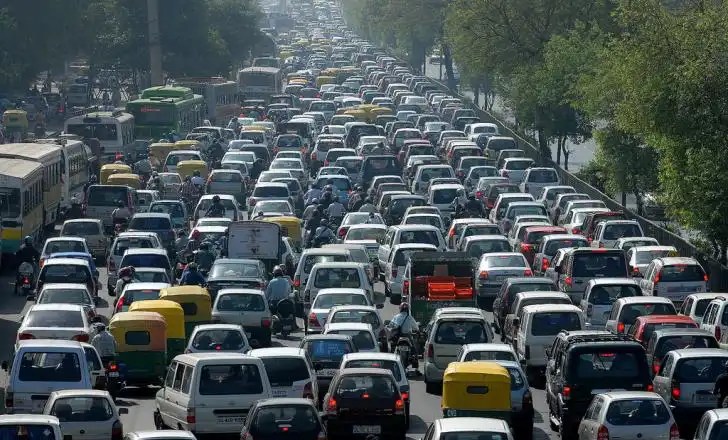
After decades commuting on New Delhi’s parlous roads, office worker Ashok Kumar spends more time than ever stuck in the gridlock that packs the Indian capital’s thoroughfares and pollutes the city.
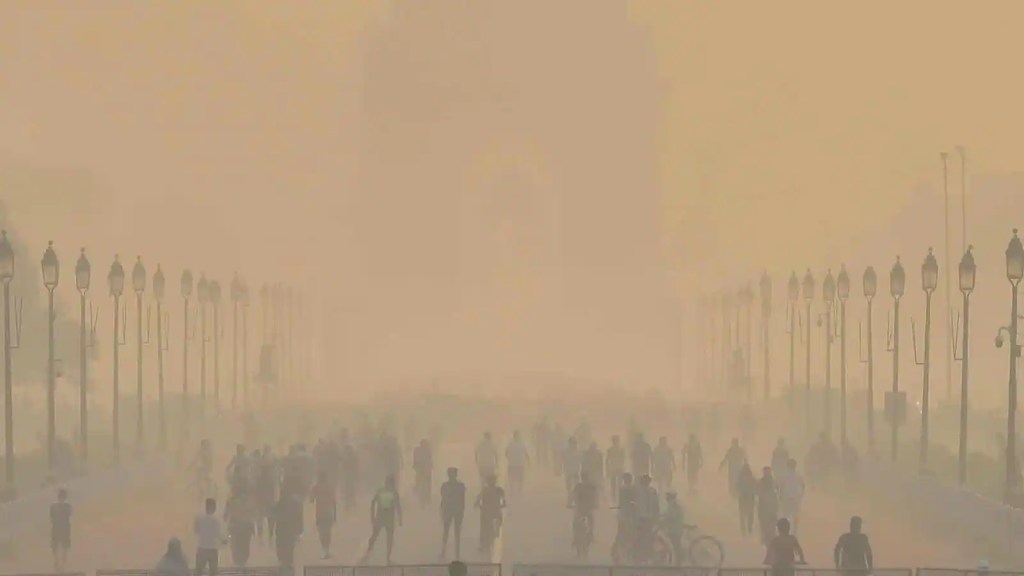
The sprawling megacity of 20 million people is regularly ranked the world’s most polluted capital, with traffic exhaust a main driver of the toxic smog that permeates the skies, especially in winter.
Delhi’s patchwork public transport network struggles to cater for a booming population, with long queues snaking outside the city’s underground metro stations each evening and overloaded buses inching their way down clogged arterials.
“When I came to Delhi, the air was clean because there were hardly any cars or bikes on the roads,” Kumar told AFP while waiting for a ride home outside the city’s main bus terminal.
Kumar spends nearly four hours each day in a “gruelling journey” to and from his home on Delhi’s far southern outskirts, alternating between commuter buses, private shared taxis and rickshaws.
Even at the age of 61, Kumar is hoping to save enough money to buy his own scooter and spare himself the pain of the daily commute.
“Not many people can afford to waste their time on public transport,” he said.
Private vehicle registrations have tripled in the last 15 years—there are now more than 13 million on the capital’s roads, government figures show.
The consequences are felt year-round, with Delhi road users spending 1.5 hours more in traffic than other major Asian cities, according to the Boston Consulting Group.
But come winter the daily inconvenience escalates into a full-blown public health crisis, as prevailing winds slow and the thick blanket of haze settles over the city sees a surge in hospital admissions from residents struggling to breathe.
Vehicle emissions accounted for more than half of the city air’s concentration of PM2.5—the smallest airborne particles most hazardous to human health—at the start of November, Delhi’s Centre for Science and Environment (CSE) said.
‘It made more sense’
A study from the centre last year showed the capital was experiencing a steady decline in public transit ridership.
Infrastructure has improved since the turn of the century, when Delhi inaugurated the first links in an underground rail network that now spans more than 250 stations and stretches into neighbouring satellite cities.
But the CSE said long distances between metro stops and residential areas was pushing commuters to switch to private vehicles.
“The Metro is convenient but I still had to take an auto-rickshaw or shared taxi from the station to my home,” Sudeep Mishra, 31, told AFP.
Mishra’s daily commute was a 50-kilometre (30-mile) return journey, including the two kilometres he had to navigate between the nearest station and his home—now all done on a second-hand motorbike.
“It was a hassle and expensive as well,” said Mishra, also a white-collar worker. “It made more sense to buy my vehicle to save time and money.”
Experts say this poor last mile connectivity is a particular issue for women, who often have to choose between private transport or risking a walk on dark and unsafe streets.
The move to private vehicles has seen Delhi’s bus network atrophy, with more than a hundred bus routes culled since 2009.
The state-run Delhi Transport Corporation’s fleet has shrunk by nearly half since a decade ago and last ordered new buses in 2008—with a planned expansion marred by corruption claims.
Cosmetic solutions
There is a direct link between this underinvestment in public transport and the capital’s worsening air pollution, said Sunil Dahiya, a New Delhi-based analyst with the Center for Research on Energy and Clean Air.
Official campaigns have attempted to lighten the haze in recent years, with the city at one point banning vehicles from the roads using an alternating odd-even system based on licence plate numbers.
Groups of youngsters are paid to stand at busy traffic intersections, waving placards urging drivers to turn off their ignitions while waiting at red lights.
And incentives have been offered for electric vehicle owners, but with only 145 charging stations across the city, take-up has been slow.
Dahiya told AFP that only a huge investment to make public transport more appealing and convenient would start to solve the intractable problem.
“We need aggressive growth in public transport to start seeing an absolute reduction in air pollution levels,” he said.
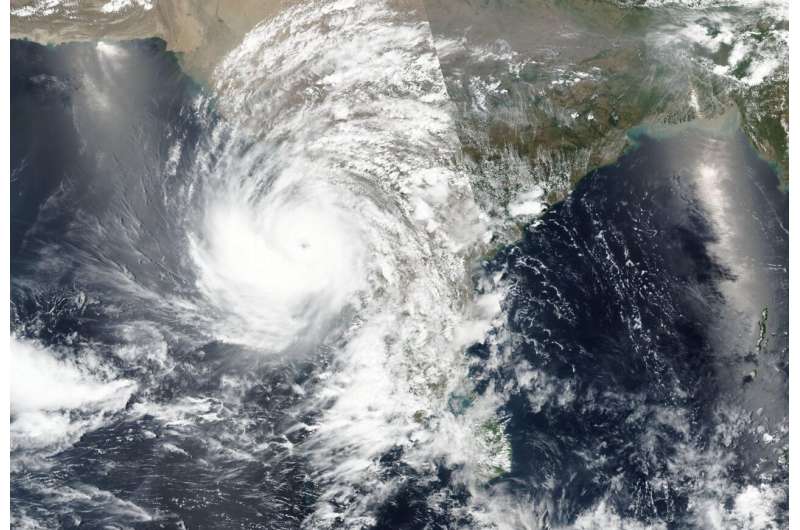
A powerful cyclone roaring in the Arabian Sea was moving toward India’s western coast on Monday as authorities tried to evacuate hundreds of thousands of people and suspended COVID-19 vaccinations in one state.
Cyclone Tauktae, which has already killed six people in parts of southern India, is expected to make landfall on Monday evening in Gujarat state with winds of up to 175 kph (109 mph), a statement by the India Meteorological Department said.
After the cyclone slams ashore, forecasters warn of the potential for extensive damage from high winds, heavy rainfall and flooding in low-lying areas.
The massive storm comes as India is battling with a devastating coronavirus surge—and both the storm and the virus could exacerbate the effects of the other. The storm has already led to the suspension of some vaccination efforts and there is greater risk of virus transmission in crowded evacuation shelters
Virus lockdown measures, meanwhile, could slow relief work after the storm, and damage from the storm could potentially destroy roads and cut vital supply lines for things like vaccines and medical supplies needed for virus patients.
In Gujarat, vaccinations were suspended for two days and authorities worked to evacuate hundreds of thousands of people to temporary relief shelters. The state’s Chief Minister Vijay Rupani Monday asked officials to ensure that the oxygen supplies to hospitals are not disrupted.
In Maharashtra, operations at Mumbai city’s Chhatrapati Shivaji Maharaj International Airport were suspended for three hours.
Already, thousands of rescue and relief teams from the army, navy and coast guard, along with ships and aircraft, have been deployed for recovery operations.
India’s western coast no stranger to devastating cyclones, but changing climate patterns have caused them to become more intense, rather than more frequent.
In May 2020, nearly 100 people died after Cyclone Amphan, the most powerful storm to hit eastern India in more than a decade, ravaged the region and left millions without power.
The report urges the UK government to reverse its decision to scrap air passenger duty on UK return flights.
And it wants ministers to re-instate the Green Homes Grant scheme they also scrapped recently.
The document has come from the UK-based Cambridge Sustainability Commission on Scaling Behaviour Change.
It’s a panel of 31 individuals who study people’s behaviour relating to the environment. They were tasked to find the most effective way of scaling up action to tackle carbon emissions.
Their critics say the best way to cut emissions faster is through technological improvements – not through measures that would prove unpopular.
But the lead author of the report, Prof Peter Newell, from Sussex University, told BBC News: “We are totally in favour of technology improvements and more efficient products – but it’s clear that more drastic action is needed because emissions keep going up.
“We have got to cut over-consumption and the best place to start is over-consumption among the polluting elites who contribute by far more than their share of carbon emissions.
“These are people who fly most, drive the biggest cars most and live in the biggest homes which they can easily afford to heat, so they tend not to worry if they’re well insulated or not.
“They’re also the sort of people who could really afford good insulation and solar panels if they wanted to.”
Prof Newell said that to tackle climate change, everyone needs to feel part of a collective effort – so that means the rich consuming less to set an example to poorer people.
He continued: “Rich people who fly a lot may think they can offset their emissions by tree-planting schemes or projects to capture carbon from the air. But these schemes are highly contentious and they’re not proven over time.
The wealthy, he said, “simply must fly less and drive less. Even if they own an electric SUV that’s still a drain on the energy system and all the emissions created making the vehicle in the first place”.
Sam Hall, from the Conservative Environment Network, told BBC News: “It’s right to emphasise the importance of fairness in delivering (emissions cuts) – and policy could make it easier for people and businesses to go green – through incentives, targeted regulation and nudges.
“But encouraging clean technologies is likely to be more effective, and more likely to enjoy public consent, than hefty penalties or lifestyle restrictions.”
But Prof Newell said existing political structures allowed wealthy firms and individuals to lobby against necessary changes in society that might erode the lifestyles of the rich.
The recent report of the UK Climate Assembly, for example, proposed a series of measures targeting carbon-intensive behaviours such as shifting away from meat and dairy produce; banning the most polluting SUVs; and imposing frequent flyer levies.
The Treasury told BBC News that a frequent flyer levy might require the government to collect and store personal information on each passenger.
This could raise issues of data processing, handling and privacy issues. It would also be hard to keep track of people with multiple passports.
But the commission’s report said: “The goals of the Paris Agreement on climate change cannot be achieved without radical changes to lifestyles and shifts in behaviour, especially among the wealthiest members of society.
“If change across society is to be brought about at the speed and scale required to meet agreed climate targets, we need to shrink and share: reduce carbon budgets and share more equally.”
The report is the latest in a long-running dialogue over what it means to be “fair” while tackling climate change.
Poorer nations such as India have consistently argued that they should be allowed to increase their pollution because it’s so much lower per person than emissions from rich nations.
The issue forms part of the tangled tapestry of negotiations behind next week’s climate summit organised by President Biden and the COP climate summit in the UK scheduled for November.



 BIOLOGY, ENVIRONMENT & MORE