A 30-year-old woman from the city of Esperanza, Argentina — the so-called Esperanza Patient — appears to be the second person whose immune system cleared the HIV-1 virus without antiretroviral therapy.
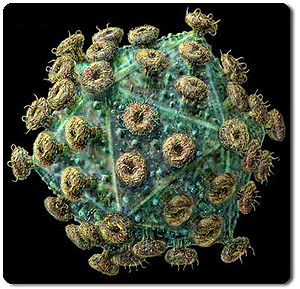
“During infection, HIV places copies of its genome into the DNA of cells, creating what is known as a viral reservoir,” said senior co-author Dr. Xu Yu, a researcher at Ragon Institute of MGH, MIT and Harvard Brigham and Women’s Hospital, and her colleagues.
“In this state, the virus effectively hides from anti-HIV drugs and the body’s immune response.”
“In most people, new viral particles are constantly made from this reservoir.”
“Antiretroviral therapy can prevent the new viruses from being made but cannot eliminate the reservoir, necessitating daily treatment to suppress the virus.”
“Some people, known as elite controllers, have immune systems that are able to suppress HIV without the need for medication.”
“Though they still have viral reservoirs that can produce more HIV virus, a type of immune cell called a killer T cell keeps the virus suppressed without the need for medication.”
In 2020, Dr. Yu and co-authors identified the first elite controller who had no intact HIV-1 viral sequence in her genome, indicating that her immune system may have eliminated the HIV-1 reservoir — what the scientists call a sterilizing cure.
The researchers sequenced billions of cells from that patient — known as the San Francisco Patient — searching for any HIV-1 sequence that could be used to create new virus, and found none.
The newly-identified patient, like the San Francisco Patient, has no intact HIV-1 genomes in a total of 1.188 billion peripheral blood mononuclear cells and 503 million mononuclear cells from placental tissues.
“These findings, especially with the identification of a second case, indicate there may be an actionable path to a sterilizing cure for people who are not able to do this on their own,” Dr. Yu said.
“The results may suggest a specific killer T cell response common to both patients driving this response, with the possibility that other people with HIV have also achieved a sterilizing cure.”
“If the immune mechanisms underlying this response can be understood by researchers, they may be able to develop treatments that teach others’ immune systems to mimic these responses in cases of HIV infection.”
“We are now looking toward the possibility of inducing this kind of immunity in persons on antiretroviral therapy through vaccination, with the goal of educating their immune systems to be able to control the virus without antiretroviral therapy,” she said.
Hope this seemingly magical recovery opens the doors to the ultimate cure/prevention for HIV infection!
“Like a soldier or an athlete, innate immune cells can be trained by past experiences to become better at fighting infections.”
UCLA researchers have discovered the fundamental rule that allows the human body’s immune cells to be trained to aggressively respond to viruses, bacteria and other invaders, the university announced Thursday.
UCLA researchers identified a molecular mechanism within macrophages, which are infection-fighting cells in the innate immune system, that determines whether and how well the cells can be trained to fight invaders.
“Like a soldier or an athlete, innate immune cells can be trained by past experiences to become better at fighting infections,” said the study’s lead author, Quen Cheng, an assistant clinical professor of infectious diseases at UCLA’s Geffen School of Medicine.
Cheng noted that some experiences appear to be better than others for immune training, and that “this surprising finding motivated us to better understand the rules that govern this process.”
The study was published in the journal “Science” Friday, according to UCLA, which added that the findings could lead to strategies that enhance the immune system’s function.
Researchers found that immune training can occur if a cell’s DNA becomes unwrapped and exposes new genes that enable the cell to respond more aggressively, according to the study’s senior author Alexander Hoffman, professor of microbiology and director of the Institute for Quantitative and Computational Biosciences. When DNA is wrapped, only selected regions are exposed and accessible to fight an infection.
The UCLA researchers found that the precise dynamics of a key immune signaling molecule in macrophages, which is called NFKB and helps immune cells identify threats, determine if the DNA unwraps and genes are exposed.
Researchers also reported that the dynamic activity of NFKB itself is determined by the precise type of extracellular stimulus introduced to the macrophages.
“Importantly, our study shows that innate immune cells can be trained to become more aggressive only by some stimuli and not others,” Cheng said. “This specificity is critical to human health because proper training is important for effectively fighting infection, but improper training may result in too much inflammation and autoimmunity, which can cause significant damage.”
The NFKB is activated when receptors on the immune cells detect threatening external stimuli. The dynamics of NFKB form a language that UCLA researchers compared to Morse code — it communicates to the DNA that there is an external threat and tells the genes to get ready for battle.
Researchers used the bone marrow of mice to follow the activity of NFKB in macrophages, according to UCLA. They tracked how the molecule’s dynamics changed in response to several stimuli. NFKB was successful only when the stimulus induced non-oscillating NFKB activity.
“For a long time, we’ve known intuitively that whether NFKB oscillates or not must be important, but have simply not been able to figure out how,” Cheng said. “These results are a real breakthrough for understanding the language of immune cells, and knowing the language will help us `hack’ the system to improve immune function.”
The training process was simulated with a mathematical model, as well, UCLA said. Mathematical modeling of immune regulatory systems is a key goal of Hoffman’s laboratory.
Hoffman and Cheng expect to inspire a wide range of other studies from their research, including investigations into diseases caused by immune cells, strategies to improve immune training to fight infections and how to complement existing vaccine approaches.
“This study shows how collaborations between researchers in the UCLA College and David Geffen School of Medicine can produce innovative and impactful science that benefits human health,” Hoffmann said. Cheng earned his Ph.D. under Hoffman’s guidance at UCLA’s Specialty Training and Advanced Research program.
The study’s co-lead author is Sho Ohta, an assistant professor at the University of Tokyo and a former postdoctoral scholar in Hoffmann’s UCLA laboratory. Co-authors also include UCLA M.D. and Ph.D. student Katherine Sheu; Roberto Spreafico, a former postdoctoral scholar in Hoffmann’s laboratory; Adewunmi Adelaja, UCLA M.D. student who earned his Ph.D. in Hoffmann’s laboratory; and Brooks Taylor, a former UCLA doctoral student in Hoffmann’s laboratory.
“For a long time, we’ve known intuitively that whether NFKB oscillates or not must be important, but have simply not been able to figure out how,” Cheng said. “These results are a real breakthrough for understanding the language of immune cells, and knowing the language will help us `hack’ the system to improve immune function.”
The training process was simulated with a mathematical model, as well, UCLA said. Mathematical modeling of immune regulatory systems is a key goal of Hoffman’s laboratory.
Hoffman and Cheng expect to inspire a wide range of other studies from their research, including investigations into diseases caused by immune cells, strategies to improve immune training to fight infections and how to complement existing vaccine approaches.
“This study shows how collaborations between researchers in the UCLA College and David Geffen School of Medicine can produce innovative and impactful science that benefits human health,” Hoffmann said. Cheng earned his Ph.D. under Hoffman’s guidance at UCLA’s Specialty Training and Advanced Research program.
The study’s co-lead author is Sho Ohta, an assistant professor at the University of Tokyo and a former postdoctoral scholar in Hoffmann’s UCLA laboratory. Co-authors also include UCLA M.D. and Ph.D. student Katherine Sheu; Roberto Spreafico, a former postdoctoral scholar in Hoffmann’s laboratory; Adewunmi Adelaja, UCLA M.D. student who earned his Ph.D. in Hoffmann’s laboratory; and Brooks Taylor, a former UCLA doctoral student in Hoffmann’s laboratory.
“For a long time, we’ve known intuitively that whether NFKB oscillates or not must be important, but have simply not been able to figure out how,” Cheng said. “These results are a real breakthrough for understanding the language of immune cells, and knowing the language will help us `hack’ the system to improve immune function.”
The training process was simulated with a mathematical model, as well, UCLA said. Mathematical modeling of immune regulatory systems is a key goal of Hoffman’s laboratory.
Hoffman and Cheng expect to inspire a wide range of other studies from their research, including investigations into diseases caused by immune cells, strategies to improve immune training to fight infections and how to complement existing vaccine approaches.
“This study shows how collaborations between researchers in the UCLA College and David Geffen School of Medicine can produce innovative and impactful science that benefits human health,” Hoffmann said. Cheng earned his Ph.D. under Hoffman’s guidance at UCLA’s Specialty Training and Advanced Research program.
The study’s co-lead author is Sho Ohta, an assistant professor at the University of Tokyo and a former postdoctoral scholar in Hoffmann’s UCLA laboratory. Co-authors also include UCLA M.D. and Ph.D. student Katherine Sheu; Roberto Spreafico, a former postdoctoral scholar in Hoffmann’s laboratory; Adewunmi Adelaja, UCLA M.D. student who earned his Ph.D. in Hoffmann’s laboratory; and Brooks Taylor, a former UCLA doctoral student in Hoffmann’s laboratory.
The study was funded by UCLA’s Department of Medicine’s STAR Program and the National Institutes of Health.Copyright CNS – City News Service
I was watching Netflix series- “Alexa & Katie” which is about the high school journey two best friends one of whom suffers from leukemia (blood cancer). Watching it really motivated me to find out more about the life threatening disease- cancer which kills many people every year.
While surfing I came across this article about a novel research that optimizes that our body’s own immune system can fight cancer.
Before jumping on to the article, first, let’s look at what is cancer?
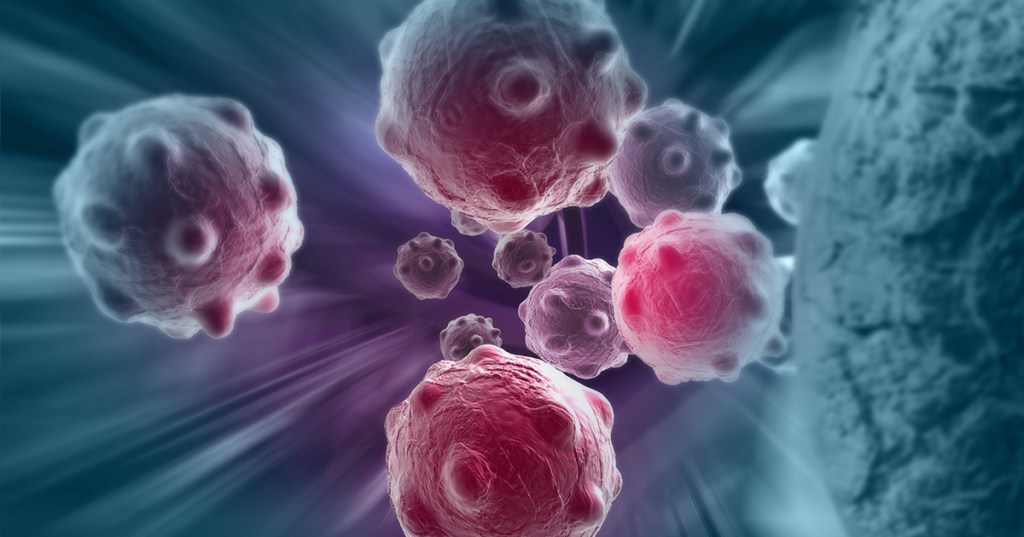
Cancer is a disease in which some of the body’s cells grow uncontrollably and spread to other parts of the body.
Cancer can start almost anywhere in the human body, which is made up of trillions of cells. Normally, human cells grow and multiply (through a process called cell division) to form new cells as the body needs them. When cells grow old or become damaged, they die, and new cells take their place.
Sometimes this orderly process breaks down, and abnormal or damaged cells grow and multiply when they shouldn’t. These cells may form tumors, which are lumps of tissue. Tumors can be cancerous.
Cancerous tumors spread into, or invade, nearby tissues and can travel to distant places in the body to form new tumors (a process called metastasis). Cancerous tumors may also be called malignant tumors. Many cancers form solid tumors, but cancers of the blood, such as leukemias, generally do not.
Armed with the basics of cancer let’s move on to the research article,
A groundbreaking study led by engineering and medical researchers at the University of Minnesota Twin Cities shows how engineered immune cells used in new cancer therapies can overcome physical barriers to allow a patient’s own immune system to fight tumors. The research could improve cancer therapies in the future for millions of people worldwide.
The research is published in Nature Communications, a peer-reviewed, open access, scientific journal published by Nature Research.
Instead of using chemicals or radiation, immunotherapy is a type of cancer treatment that helps the patient’s immune system fight cancer. T cells are a type of white blood cell that are of key importance to the immune system. Cytotoxic T cells are like soldiers who search out and destroy the targeted invader cells.
While there has been success in using immunotherapy for some types of cancer in the blood or blood-producing organs, a T cell’s job is much more difficult in solid tumors.
“The tumor is sort of like an obstacle course, and the T cell has to run the gauntlet to reach the cancer cells,” said Paolo Provenzano, the senior author of the study and a biomedical engineering associate professor in the University of Minnesota College of Science and Engineering. “These T cells get into tumors, but they just can’t move around well, and they can’t go where they need to go before they run out of gas and are exhausted.”
In this first-of-its-kind study, the researchers are working to engineer the T cells and develop engineering design criteria to mechanically optimize the cells or make them more “fit” to overcome the barriers. If these immune cells can recognize and get to the cancer cells, then they can destroy the tumor.
In a fibrous mass of a tumor, the stiffness of the tumor causes immune cells to slow down about two-fold — almost like they are running in quicksand.
“This study is our first publication where we have identified some structural and signaling elements where we can tune these T cells to make them more effective cancer fighters,” said Provenzano, a researcher in the University of Minnesota Masonic Cancer Center. “Every ‘obstacle course’ within a tumor is slightly different, but there are some similarities. After engineering these immune cells, we found that they moved through the tumor almost twice as fast no matter what obstacles were in their way.”
To engineer cytotoxic T cells, the authors used advanced gene editing technologies (also called genome editing) to change the DNA of the T cells so they are better able to overcome the tumor’s barriers. The ultimate goal is to slow down the cancer cells and speed up the engineered immune cells. The researchers are working to create cells that are good at overcoming different kinds of barriers. When these cells are mixed together, the goal is for groups of immune cells to overcome all the different types of barriers to reach the cancer cells.
Provenzano said the next steps are to continue studying the mechanical properties of the cells to better understand how the immune cells and cancer cells interact. The researchers are currently studying engineered immune cells in rodents and in the future are planning clinical trials in humans.
While initial research has been focused on pancreatic cancer, Provenzano said the techniques they are developing could be used on many types of cancers.
“Using a cell engineering approach to fight cancer is a relatively new field,” Provenzano said. “It allows for a very personalized approach with applications for a wide array of cancers. We feel we are expanding a new line of research to look at how our own bodies can fight cancer. This could have a big impact in the future.”
Honestly, let’s hope that this approach of treating cancer is able to save lives of millions of people affected with cancer

 BIOLOGY, ENVIRONMENT & MORE