Categories
environment

Human activity is slowly killing the world’s rivers, study illustrates

The rivers criss-crossing Earth are choking up and anthropogenic factors were found to be one of the prominent reasons, according to a new report. Agriculture, mining and dam construction emerged as some of the biggest contributors to this degradation.

The chemical composition of major rivers such as Yangtze, Amazon, Mississippi and Congo have been altered by natural and human activities, the study found. 

Historical data analysis of  runoff and solute concentration of 149 large rivers pointed out that higher volumes of calcium, potassium, chloride and bicarbonates are flowing through river basins and estuaries. 

The concentration of total dissolved solids draining into oceans increased 68 per cent, chloride 81 per cent, sodium 86 per cent and sulfate (142 per cent) fluxes in almost a decade, according to the report published in Nature Communications journal October 12, 2021. 

An international cohort of scientists from universities in China, the United States and the United Kingdom created a database of solute contents (some records maintained over a century) and analysed the same for almost 10 years. 
The rivers observed included the Colorado and Mississippi (USA), the Amazon (South America), the Congo (Africa), the Rhine (Europe), the Yellow and Yangtse rivers (China) and the Murray (Australia).

The polar and tropical regions were the worst-affected because most of the urbanisation and agriculture were concentrated there. Weathering of rocks are also contributing factors. 

These human activities, along with natural factors, cause seven river syndromes — salinisation, mineralisation, desalinisation, acidification, alkalisation, hardening and softening — that damage ecosystems. 

“Acidification was also observed close to the equator as a result of bicarbonate levels vital for river health being present in the rivers of South America,” the researchers wrote in the report. 

About 6,400 million tonnes of solutes reach the sea from rivers each year, the report stated. 

It called for urgent mitigation measures to prevent solute concetrations from exceeding critical levels.

Categories
environment

My Earth Day Initiative: Distribution of Plantable Pencils

Happy Earth Day guys!!!

This year’s theme of Earth Day is “Restore Our Earth” and its prime focus is restoring the Earth’s ecosystems by relying on natural processes, emerging green technologies and innovative thinking.

So I thought, what could be a better way to celebrate this earth day by encouraging people to plant trees! Couple of days ago I spent my time sitting on my table chewing the back of my pencil (not a good habit, I know😅) and brooding about how could I make tree plantation innovative and interesting. Suddenly it struck me-Pencils!! Yes, Plantable pencils. It is indeed a very innovative and attractive way to motivate people to plant trees.

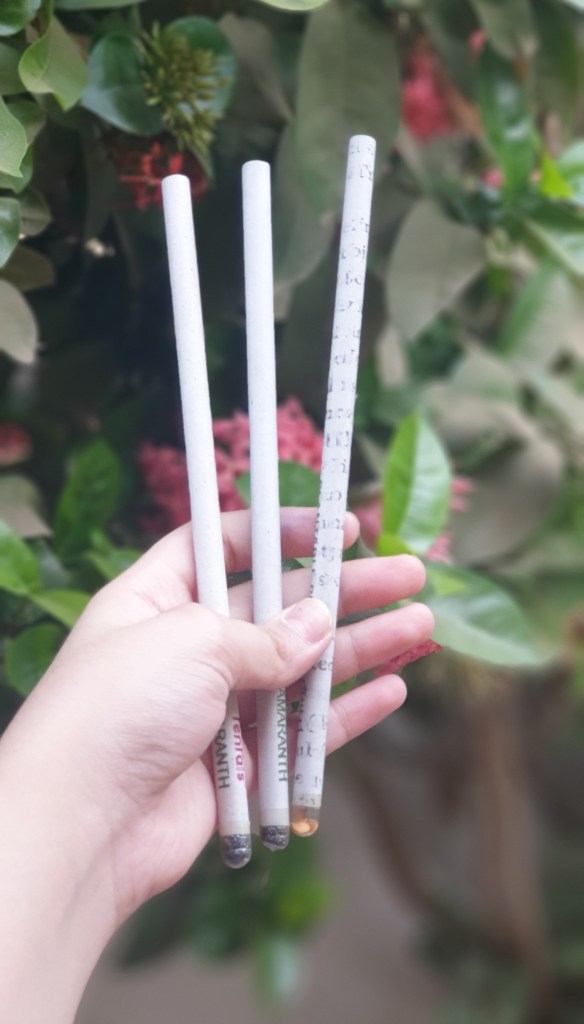
Talking more about plantable pencils, its a pencil that wants to be a plant when it grows up!! When its too short to use, plant the pencil to grow a small plant. These are innovative eco-friendly pencils made of recyclable paper. Can be sharpened like a normal pencil. It has different types of germinating seeds enclosed inside capsule. So, after using pencil, just plant it.

So, this time, on earth day, I distributed 200 plantable pencils in my neighbourhood and in some slum areas. I got immense positive response from everyone. People happily took the pencils and promised to send pics when they grew a plant out of it.

It was indeed a memorable experience for me. I got immense satisfaction for doing something good for our mother earth. Below are the pics of this memorable drive.

SMALLEST INITIATIVES LEAD TO THE BIGGEST CHANGES!!

Categories
Biology Evolution

New insight into the evolution of complex life on Earth

A novel connection between primordial organisms and complex life has been discovered, as new evidence sheds light on the evolutionary origins of the cell division process that is fundamental to complex life on Earth.

The discovery was made by a cross-disciplinary team of scientists led by Professor Buzz Baum of University College London and Dr Nick Robinson of Lancaster University.

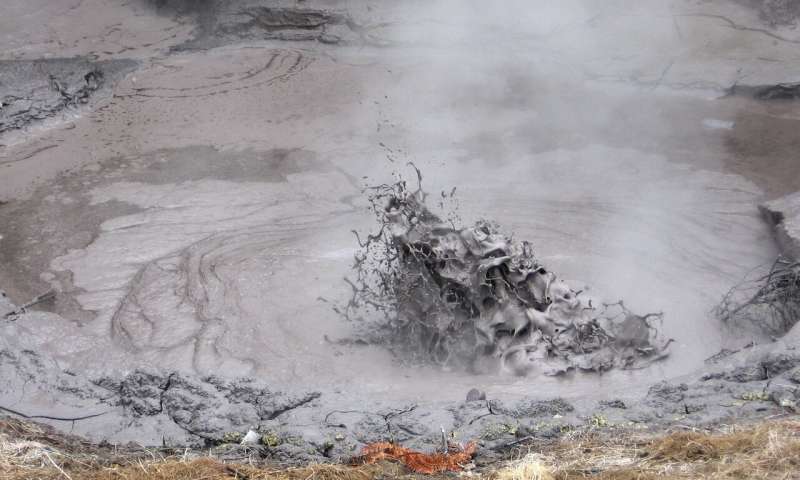
Their research, published in Science, sheds light on the cell division of the microbe Sulfolobus acidocaldarius, which thrives in acidic hot springs at temperatures of around 75?C. This microbe is classed among the unicellular organisms called archaea that evolved 3.5 billion years ago together with bacteria.

Eukaryotes evolved about 1 billion years later — likely arising from an endosymbiotic event in which an archaeal and bacterial cell merged. The resulting complex cells became a new division of life that now includes the protozoa, fungi, plants and animals.

Now a common regulatory mechanism has been discovered in the cell division of both archaea and eukaryotes after the researchers demonstrated for the first time that the proteasome — sometimes referred to as the waste disposal system of the cell — regulates the cell division in Sulfolobus acidocaldarius by selectively breaking down a specific set of proteins.

The authors report: “This is important because the proteasome has not previously been shown to control the cell division process of archaea.”

The proteasome is evolutionarily conserved in both archaea and eukaryotes and it is already well established that selective proteasome-mediated protein degradation plays a key role in the cell cycle regulation of eukaryotes.

These findings therefore shed new light on the evolutionary history of the eukaryotes.

The authors summarise: “It has become increasingly apparent that the complex eukaryotic cells arose following an endosymbiotic event between an ancestral archaeal cell and an alpha-proteobacterium, which subsequently became the mitochondria within the resulting eukaryotic cell. Our study suggests that the vital role of the proteasome in the cell cycle of all eukaryotic life today has its evolutionary origins in archaea.”

Categories
environment

Earth’s Atmosphere ‘Rings’ like a Bell

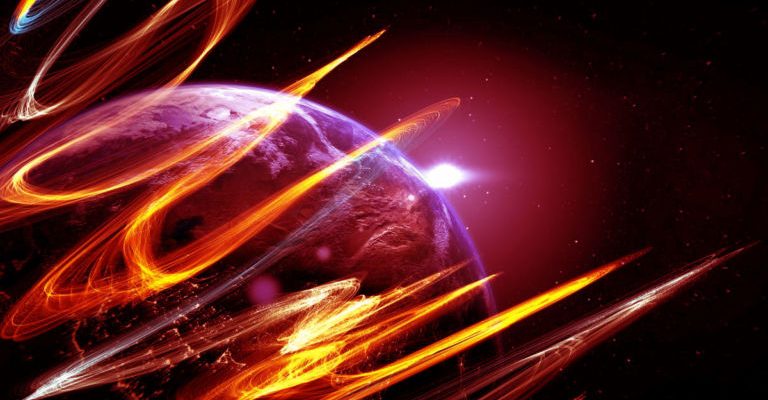
According to a new study published in the Journal of the Atmospheric Sciences, by the scientists at the University of Hawai’i at Manoa and Kyoto University, the Earth’s entire atmosphere vibrates much like a ringing bell – “a low-pitched fundamental tone alongside higher-pitched overtones.”

In the water, waves are produced by passing energy. Energy moving through the skies-from things like heat-produced pressure to the gravitational pull of celestial bodies-also creates waves.

The atmospheric waves don’t slosh around the same way ocean waves do, but they are still recognisable if one knows what to look for : moving pockets of more tightly packed air, thousands of kilometres long. The waves of atmospheric pressure spans the globe and travels around the equator, some moving east to west and others west to east. Each of these waves is a resonant vibration of the global atmosphere, analogous to one of the resonant pitches of a bell.

The discovery of these theories of atmospheric circulation will help scientists better predict weather patterns and understand the makeup of our atmosphere.

Design a site like this with WordPress.com
Get started