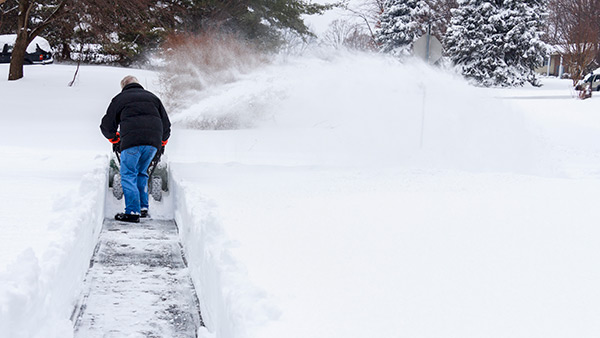
It may seem counterintuitive, but more snowfall during winter storms is an expected outcome of climate change. That’s because a warmer planet is evaporating more water into the atmosphere. That added moisture means more precipitation in the form of heavy snowfall or downpours.1
During warmer months, this can cause record-breaking floods. But during the winter – when our part of the world is tipped away from the sun – temperatures drop, and instead of downpours we can get massive winter storms.
A normal winter feels colder to us now
Winters in the U.S. have warmed a lot since the 1970s – making what used to be a typical winter feel even more frigid nowadays. This wintertime warming trend is most prominent in some of the coldest areas of the country, such as the Northeast and Upper Midwest.2
Researchers have found that the pace of winter warming has picked up in recent decades. Between 1970 and 2017, winter in the mainland U.S. warmed more than four-and-a-half times faster per decade than over the past 100 years.
Average temperatures keep going up
A cold front may bring a welcome change to sweltering summers, but overall, our planet is experiencing a dramatic warming trend.
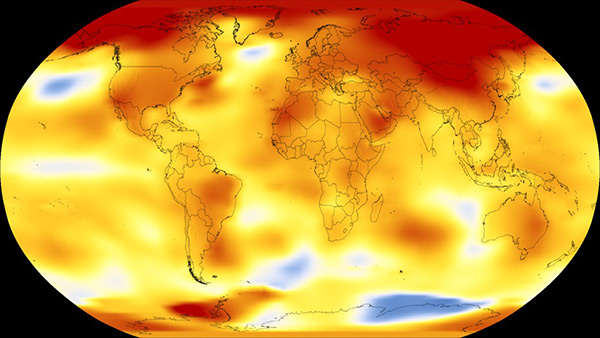
According to NOAA and NASA, 2016 shattered records as the warmest year across global land and ocean surfaces since record-keeping began in 1880.3 This is a pattern that goes back decades.
Warmer Arctic may worsen cold snaps
Research teams are starting to connect the dots between a warming Arctic and cold winters in the eastern United States.4
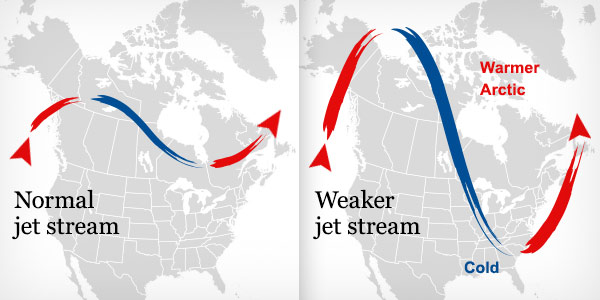
While it is still too early for scientists to reach a consensus about this plausible link, it is thought that melting sea ice in the Arctic can weaken the jet stream, allowing for frigid polar air to penetrate farther south than normal.
The ocean is beingdisproportionately impacted by increasing carbon dioxide (CO2) and other greenhouse gas emissions (GHG) from human activities.
This causes changes in water temperature, ocean acidification and deoxygenation, leading to changes in oceanic circulation and chemistry, rising sea levels, increased storm intensity, as well as changes in the diversity and abundance of marine species.
Degradation of coastal and marine ecosystems threatens the physical, economic and food security of local communities, as well as resources for global businesses.
Climate change weakens the ability of the ocean and coasts to provide critical ecosystem services such as food, carbon storage, oxygen generation, as well as to supportnature-based solutions to climate change adaptation.
The sustainable management, conservation and restoration of coastal and marine ecosystems are vital to support the continued provision of ecosystem services on which people depend. A low carbon emissions trajectory is indispensable to preserve the health of the ocean.
What is the issue ?
At the front line of climate change, the ocean, the coastlines and coastal communities are being disproportionately impacted by increasing carbon dioxide (CO2) and other greenhouse gas (GHG) emissions from human activities.
The ocean plays a central role in regulating the Earth’s climate. The Fifth Assessment Report published by the Intergovernmental Panel on Climate Change (IPCC) in 2013 revealed that it has thus far absorbed 93% of the extra energy from the enhanced greenhouse effect, with warming now being observed at depths of 1,000 m. As a consequence, this has led to increased ocean stratification (prevention of water mixing due to different properties of water masses), changes in ocean current regimes, and expansion of depleted oxygen zones. Changes in the geographical ranges of marine species and shifts in growing seasons, as well as in the diversity and abundance of species communities are now being observed. At the same time, weather patterns are changing, with extreme events increasing in frequency.
Atmospheric warming is leading to the melting of inland glaciers and ice, causing rising sea levels with significant impacts on shorelines (coastal erosion, saltwater intrusion, habitat destruction) and coastal human settlements. The IPCC projects global mean sea level to increase by 0.40 [0.26–0.55] m for 2081–2100 compared with 1986–2005 for a low emission scenario, and by 0.63 [0.45–0.82] m for a high emission scenario. Extreme El Niño events are predicted to increase in frequency due to rising GHG emissions.
CO2 emissions are also making the ocean more acidic, making many marine species and ecosystems increasingly vulnerable. Ocean acidification reduces the ability of marine organisms, such as corals, plankton and shellfish, to build their shells and skeletal structures. It also exacerbates existing physiological stresses (such as impeded respiration and reproduction) and reduces growth and survival rates during the early life stages of some species.
Why is it important ?
The ocean and coasts provide critical ecosystem services such as carbon storage, oxygen generation, food and income generation.
Coastal ecosystems like mangroves, salt marshes and seagrasses play a vital role in carbon storage and sequestration. Per unit of area, they sequester carbon faster and far more efficiently than terrestrial forests. When these ecosystems are degraded, lost or converted, massive amounts of CO2 – an estimated 0.15-1.02 billion tons every year – are released into the atmosphere or ocean, accounting for up to 19% of global carbon emissions from deforestation. The ecosystem services such as flood and storm protection that they provide are also lost.
The impacts of ocean warming and acidification on coastal and marine species and ecosystems are already observable. For example, the current amount of CO2 in the atmosphere is already too high for coral reefs to thrive, putting at risk food provision, flood protection and other services corals provide. Moreover, increased GHG emissions exacerbate the impact of already existing stressors on coastal and marine environments from land-based activities (e.g. urban discharges, agricultural runoff and plastic waste) and the ongoing, unsustainable exploitation of these systems (e.g. overfishing, deep-sea mining and coastal development). These cumulative impacts weaken the ability of the ocean and coasts to continue to perform critical ecosystem services.
The degradation of coastal and marine ecosystems threatens the physical, economic and food security of coastal communities – around 40% of the world population. Local fishers, indigenous and other coastal communities, international business organisations and the tourism industry are already seeing the effects of climate change particularly in Small Island Developing States (SIDS) and many of the Least Developed Countries (LDCs).
Weakened or even lost ecosystems increase human vulnerability in the face of climate change and undermine the ability of countries to implement climate change adaptation and disaster risk reduction measures, including those provided for in Nationally Determined Contributions (NDCs) under the Paris Agreement on climate change.
The sustainable management, conservation and restoration of coastal and marine ecosystems are vital to support the continued provision of carbon sequestration and other ecosystem services on which people depend.
Marine Protected Areas (MPAs) for example can protect ecologically and biologically significant marine habitats, including regulating human activities to prevent environmental degradation. At the IUCN World Conservation Congress 2016, IUCN Members approved a resolution calling for the protection of 30% of the planet’s ocean by 2030.
Protection and restoration of coastal ecosystems is also needed. Policies to prevent the conversion of these ecosystems to other land uses, for example regulating coastal development, can ensure their protection.
Countries can also develop policies and ensure the implementation of sustainable practices in all industries that impact the ocean and coasts, including fisheries and the tourism industry.
Support for scientific research is needed. This will ensure the continued monitoring and analyses of the impacts of climate change, with the knowledge gained used to design and implement adequate and appropriate mitigation and adaptation strategies.
Globally ambitious efforts are also needed to reduce the use of fossil fuels, increase the use of renewable energy systems and enhance energy efficiency. This will reduce the impacts of CO2 and other GHGs on the ocean.
The key is to harness existing opportunities, by, for example, conserving certain coastal carbon ecosystems under the reducing emissions from deforestation and forest degradation (REDD+) mechanism, as well as implementing the Nationally Determined Contributions (NDCs) under the Paris Agreement.
A first-of-its kind virtual event, Daring Cities 2020 positioned itself as the global forum for urban leaders taking action on the climate emergency. With 100 sessions and more than 200 hours of online discussions designed with urban leaders in mind, the event unfolded over the span of three weeks.
In addition to these core plenary sessions, Daring Cities’ sessions covered topics from nature-based solutions and innovative climate finance, to urban resilience and social equity. Hundreds of city leaders, practitioners, researchers, and experts shared their insights and experiences on how to take radical action in our cities, towns and regions to tackle the climate emergency, especially in light of the current Covid-19 pandemic.
Of those rich thematic offerings, here are the five most popular sessions of Daring Cities 2020. All session recordings are available on the website and are free for anyone with a Daring Cities 2020 profile.
Energy systems are the backbone of urban activities and systems from public transport to heating and cooling. Effective local renewable energy deployment can give cities the opportunity to achieve a wide range of socio-economic and environmental objectives.
In this session, attendees had a closer look at energy supply and efficient energy consumption. They learned about the opportunities that renewable energy presents for cities to achieve a wide range of objectives, including fighting air pollution, improving public health, and mitigating climate change.
Rapid and irreversible urbanization has escalated the impact of environmental degradation, climate change and various hazards and crises. But these challenges have given rise to a growing trend of sustainable urban renewal.
Governments of different countries, including China and Germany, are endeavoring to support the transformation and regeneration of their cities and communities to become more sustainable, resilient and livable.
Nature provides immense value and multiple benefits to urban communities. The loss of nature is a global crisis in its own right, and cities are not only part of the problem, but are also key to the solution.
This session introduced CitiesWithNature, a global partnership initiative co-founded by ICLEI, the International Union for the Conservation of Nature, and The Nature Conservancy to the Daring Cities audience. The initiative provides a shared online platform for cities and regions to connect, learn, share, and inspire each other in pursuit of achieving global impact through collective local action for nature.
Attendees of this session left with a better understanding of how their city can become a city that is daring enough to demonstrate their commitment to nature.
Local governments are at the frontline of climate action. Yet subnational governments often struggle to access finance required for sustainable, low-to-no emission, climate resilient development.
The session provided a platform for local governments to interact with financial experts, helping each other to better understand how to find and use innovative financing tools such as green bonds, revolving funds, energy performance contracts or crowdfunding for their climate project.
Many cities are looking for solutions to protect themselves from the impacts of disasters and climate change. However, many of these solutions are expensive, and they are not always sustainable or built for the growing impacts of natural hazards. Despite growing scientific evidence on their potential, the adoption of these nature-based solutions is still not widespread, especially in cities.
This session not only explored barriers but also promising ways forward, including best practices from frontrunner cities in different ecosystems, research findings and capacity building activities. It took a deep dive into how the perception and use of urban green areas changed in the context of COVID-19 and what opportunities this change might present for the acceleration of nature-based solution uptake.
By bringing together panelists and participants from research, policy and practice, they were able to get a better understanding of how cities can best be supported in adopting nature-based solutions.
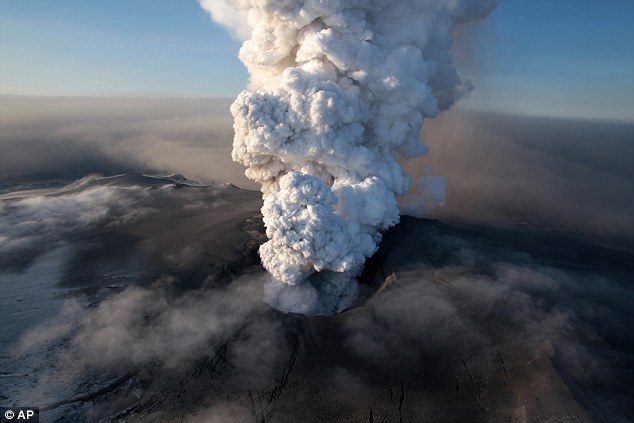
When volcanoes erupt, these geologic monsters produce tremendous clouds of ash and dust — plumes that can blacken the sky, shut down air traffic and reach heights of roughly 25 miles above Earth’s surface.
A new study led by the University of Colorado Boulder suggests that such volcanic ash may also have a larger influence on the planet’s climate than scientists previously suspected.
The new research, published in the journal Nature Communications, examines the eruption of Mount Kelut (or Kelud) on the Indonesian island of Java in 2014. Drawing on real-world observations of this event and advanced computer simulations, the team discovered that volcanic ash seems to be prone to loitering — remaining in the air for months or even longer after a major eruption.
“What we found for this eruption is that the volcanic ash can persist for a long time,” said Yunqian Zhu, lead author of the new study and a research scientist at the Laboratory for Atmospheric and Space Physics (LASP) at CU Boulder.
Lingering ash
The discovery began with a chance observation: Members of the research team had been flying an unmanned aircraft near the site of the Mount Kelut eruption — an event that covered large portions of Java in ash and drove people from their homes. In the process, the aircraft spotted something that shouldn’t have been there.
“They saw some large particles floating around in the atmosphere a month after the eruption,” Zhu said. “It looked like ash.”
She explained that scientists have long known that volcanic eruptions can take a toll on the planet’s climate. These events blast huge amounts of sulfur-rich particles high into Earth’s atmosphere where they can block sunlight from reaching the ground.
Researchers haven’t thought, however, that ash could play much of a role in that cooling effect. These chunks of rocky debris, scientists reasoned, are so heavy that most of them likely fall out of volcanic clouds not long after an eruption.
Zhu’s team wanted to find out why that wasn’t the case with Kelut. Drawing on aircraft and satellite observations of the unfolding disaster, the group discovered that the volcano’s plume seemed to be rife with small and lightweight particles of ash — tiny particles that were likely capable of floating in the air for long periods of time, much like dandelion fluff.
“Researchers have assumed that ash is similar to volcanic glass,” Zhu said. “But what we’ve found is that these floating ones have a density that’s more like pumice.”
Disappearing molecules
Study coauthor Brian Toon added that these pumice-like particles also seem to shift the chemistry of the entire volcanic plume.
Toon, a professor in LASP and the Department of Atmospheric and Oceanic Sciences at CU Boulder, explained that erupting volcanos spew out a large amount of sulfur dioxide. Many researchers previously assumed that those molecules interact with others in the air and convert into sulfuric acid — a series of chemical reactions that, theoretically, could take weeks to complete. Observations of real-life eruptions, however, suggest that it happens a lot faster than that.
“There has been a puzzle of why these reactions occur so fast,” Toon said.
He and his colleagues think they’ve discovered the answer: Those molecules of sulfur dioxide seem to stick to the particles of ash floating in the air. In the process, they may undergo chemical reactions on the surface of the ash itself — potentially pulling around 43% more sulfur dioxide out of the air.
Ash, in other words, may hasten the transformation of volcanic gases in the atmosphere.
Just what the impact of those clouds of ash are on the climate isn’t clear. Long-lasting particles in the atmosphere could, potentially, darken and even help to cool the planet after an eruption. Floating ash might also blow all the way from sites like Kelut to the planet’s poles. There, it could kickstart chemical reactions that would damage Earth’s all-important ozone layer.
But the researchers say that one thing is clear: When a volcano blows, it may be time to pay a lot more attention to all that ash and its true impact on Earth’s climate.
“I think we’ve discovered something important here,” Toon said. “It’s subtle, but it could make a big difference.”



 BIOLOGY, ENVIRONMENT & MORE