Categories
Biology human body

BIOPRINTING : A giant leap in the healthcare system

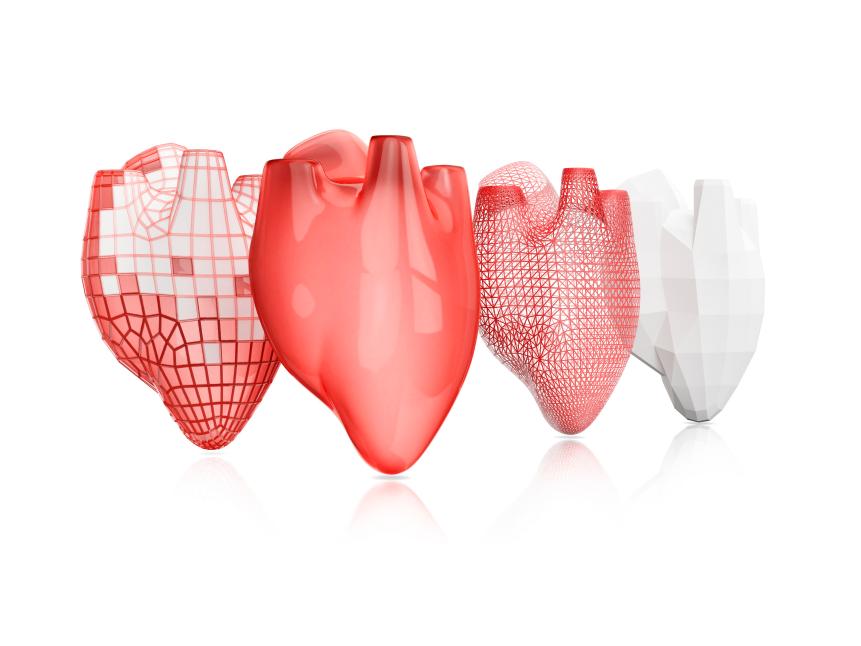
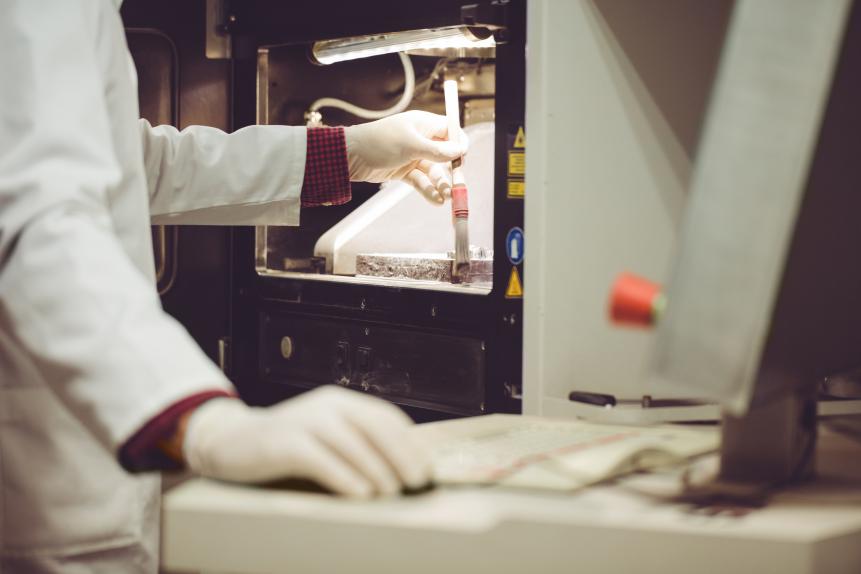
Bioprinting is the medical and biotechnology equivalent of 3D printing. By using the same principles, the aim is to rapidly develop living structures resembling human-grown organs and tissue that can be used to heal people or test new drugs.

Precision Medicine
1088374106

Medical fields such as cosmetic surgery, tissue engineering, and regenerative medicine operate on the principle that we can precisely manufacture tissue or whole body parts to help the body repair itself. Bioprinting offers the accuracy of precisely measured biology alongside rapid manufacture so we can heal people more quickly and effectively.

Of course, printing biological tissue is much more complex than building a mechanical part. There are intricate layers of cells in living tissue that need growth factors and surrounding structures to develop successfully. To mimic this bioprinters use bioink made from cells, biochemical nutrients and biological scaffolds to support cells in a precise order.

Additional Materials Required
909024898

Bioinks have to operate under conditions that are suitable to living, growing tissue, so they cannot really be printed at temperatures that exceed body temperature. They use a binding agent – often a biopolymer gel, or hydrogel – that acts as the molecular scaffold.

Common components of bioinks include collagen and hyaluronic acid, active molecules found in extracellular matrix (ECM) in the body, plus substances like alginate, a vegetable biopolymer refined from seaweed that retains water. Creating the right cell matrix helps the cells to stick together, communicate with each other and turn into the right types of cells to make the target tissue.

The Process is Real

Perhaps the simplest form of bioprinting is inkjet printing. Bioink is sprayed through tiny nozzles so it has to be almost liquid and this limits the biological materials that can be printed. Most 3D printers operate by extruding material through a nozzle and bioprinters can use extrusion too, though care has to be taken not to damage cells through excessive force.

Other techniques such as laser-assisted bioprinting or electrospinning – which use laser and electrical energy to position cells – are incredibly precise and can be used with thicker bioinks, but they are more tricky to use with living cells and not as rapid or able to create large quantities of tissue.

Once the bioprinter has done its work then the post-processing stage begins. Bioreactor systems are often employed to help the tissue to mature. They can be used to mimic the forces and biochemical support that tissue needs to grow and differentiate correctly.

You Have So Much Potential

649528686

Bioprinting may be a relatively new field but the results so far are encouraging. Stem cells, which have the potential to turn into several types of cells, are being used to create bone or cartilage to mend fractures and joint injuries.

Australian researchers have used neural cells in a custom-made bioink to create a ‘benchtop brain‘ that allows medics to test brain function, new drugs and study brain disorders like schizophrenia. Meanwhile, regenerative medicine scientists in the US have created a bioprinter able to construct ear, muscle and bone structures with the right size, strength and function for implantation.

One of the primary goals of bioprinting is to create functioning internal organs such as livers, kidneys or hearts. By printing compatible organs using a patient’s own stem cells, the donor waiting list could become a thing of the past. To get to this point there have been some important breakthroughs in printing vascularized tissue in complex 3D

Organ printing can improve the health of society in general by eliminating the problem of diseases caused by organ failure, costly treatments and social care. That promise may be years away from realization but rapid prototyping enabled by bioprinting is pushing medical advances forward at pace.
Categories
Biology human body

CROWN OF NANOMEDICINE

An international team of researchers led by Michigan State University’s Morteza Mahmoudi has developed a new method to better understand how nanomedicines — emerging diagnostics and therapies that are very small yet very intricate — interact with patients’ biomolecules.

Medicines based on nanoscopic particles have the promise to be more effective than current therapies while reducing side effects. But subtle complexities have confined most of these particles to research labs and out of clinical use, said Mahmoudi, an assistant professor in the Department of Radiology and the Precision Health Program.

“There’s been a considerable investment of taxpayer money in cancer nanomedicine research, but that research hasn’t successfully translated to the clinic,” Mahmoudi said. “The biological effects of nanoparticles, how the body interacts with nanoparticles, remain poorly understood. And they need to be considered in detail.”

Mahmoudi’s team has now introduced a unique combination of microscopy techniques to enable more detailed consideration of those biological effects, which the researchers described in the journal Nature Communications, published online on Jan. 25.

The team’s methods let researchers see important differences between particles exposed to human plasma, the cell-free part of blood that contains biomolecules including proteins, enzymes and antibodies.

These biological bits latch onto a nanoparticle, creating a coating referred to as a corona (not to be confused with the novel coronavirus), the Latin word for crown. This corona contains clues about how nanoparticles interact with a patient’s biology. Now, Mahmoudi and his colleagues have shown how to get an unprecedented view of that corona.

“For the first time, we can image the 3-D structure of the particles coated with biomolecules at the nano level,” Mahmoudi said. “This is a useful approach to get helpful and robust data for nanomedicines, to get the kind of data that can affect scientists’ decisions about the safety and efficacy of nanoparticles.”

Although work like this is ultimately helping move therapeutic nanomedicines into the clinic, Mahmoudi is not optimistic that broad approval will happen any time soon. There’s still much to learn about the particles. Furthermore, one of the things that researchers do understand very well — that minute variations in these diminutive drugs can have outsized impact — was underscored by this study.

The researchers saw that the coronas of nanoparticles from the same batch, exposed to the same human plasma, could provoke a variety of reactions by a patient to a single dose.

Still, Mahmoudi sees an opportunity in this. He believes these particles could shine as diagnostics tools instead of drugs. Rather than trying to treat diseases with nanoscale medicine, he believes that persnickety particles would be well suited for the early detection of disease. For example, Mahmoudi’s group has previously shown this diagnostic potential for cancers and neurodegenerative diseases.

“We could become more proactive if we used nanoparticles as a diagnostic,” he said. “When you can detect disease at the earlier stages, it becomes easier to treat them.”

Nanomedicine | The Scientist Magazine®
NANOMEDICINE
Categories
Biology human body

THIRST: NEUROBIOLOGY

Neurobiology of Thirst: Neural Mechanisms that Control Hydration

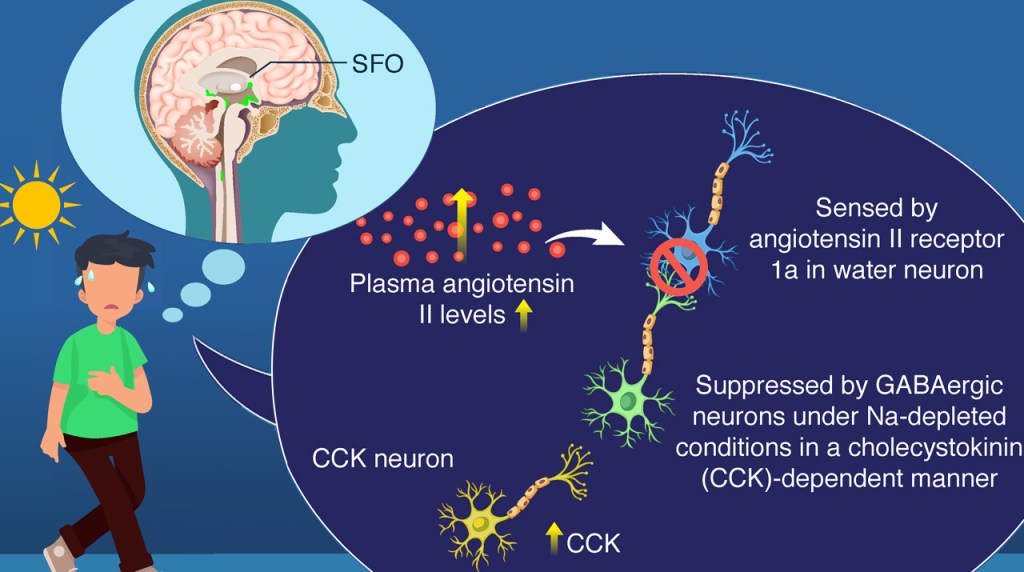
Scientists at the Tokyo Institute of Technology (Tokyo Tech) provide deeper insights into neural thirst control. Their study published recently in Nature Communications indicates that cholecystokinin-mediated water-intake suppression is controlled by two neuronal ‘thirst-suppressing’ sub-populations in the subfornical organ in the brain; one population is persistently activated by excessive water levels, and the other, transiently after drinking water.

Water sustains life on earth. The first life originated in an ancient sea, and since then, nearly every species that has existed in the past or lives today depends on the exact balance of salt and water (~145 mM; called body-fluid homeostasis or salt homeostasis) for survival. Humans can go weeks without food but will not last more than a few days without water, stressing the importance of this liquid.

The human body has several intricate mechanisms to make sure we consume an appropriate amount of water for maintaining the homeostasis, which is requisite to survival. One of these simple but key “hacks,” is thirst. When the body experiences dehydration on a hot day (noted by the excess of sodium in the body compared to water, a condition called hypernatremia), the brain sends “signals” to the rest of the body, making us crave the tall glass of water. On the other hand, under a condition called hyponatremia, where there is a more water than sodium, we suppress water drinking. The neural mechanisms of how this happens are a subject of great interest.

A team of researchers from Tokyo Institute of Technology, headed by Prof Masaharu Noda, have conducted extensive research into this. In their previous studies, they identified that thirst is driven by the so-called “water neurons” in the subfornical organ (SFO) of the brain, a region just outside the blood-brain barrier. When the body is dehydrated, the plasma levels of a peptide hormone called angiotensin II increase. These levels are detected by special angiotensin II “receptors” of water neurons to stimulate water intake. In turn, under sodium-depleted conditions (where there is more water than sodium), the activity of these water neurons is suppressed by “GABAergic” interneurons. “The latter control appeared to be dependent on the hormone cholecystokinin (CCK) in the SFO. However, the CCK-mediated neural mechanisms underlying the inhibitory control of water intake had not been elucidated so far,” states Prof Noda.

NEUROBIOLOGY OF THIRST

Categories
Biology Evolution human body

New microevolutinary change :Median artery in the human forearm

The median artery is the main vessel that supplies blood to the forearm and hand, when first formed in the mother’s womb, but it disappears once two arteries seen in adults develop.

The radial and ulnar arteries usually replace the median artery during developmental stages in the womb, so most adults obviously don’t have a median artery, but increasing numbers of cases retain it, so a person can have all three arteries.

The median artery is now present in about 35% of people and researchers predict that people born 80 years from now will all carry a median artery if the trend continues.

“The median artery offers benefits because it increases overall blood supply and can be used as a replacement in surgical procedures in other parts of the human body,” said senior author Professor Maciej Henneberg, a researcher in the Biological Anthropology and Comparative Anatomy Research Unit at the University of Adelaide and the Institute of Evolutionary Medicine at the University of Zurich.

“This is microevolution in modern humans and the median artery is a perfect example of how we’re still evolving because people born more recently have a higher prevalence of this artery when compared to humans from previous generations.”

In the study, Professor Henneberg and colleagues aimed to investigate the prevalence of persistent median arteries in postnatal humans over the last 250 years and to test the hypothesis that a secular trend of increase in its prevalence has occurred.

They found a total of 26 median arteries in 78 upper limbs (a prevalence rate of 33.3%) obtained from Australians aged 51 to 101 years.

“Our study into the prevalence of the artery over generations shows that modern humans are evolving at a faster rate than at any point in the past 250 years,” said lead author Dr. Teghan Lucas, a researcher in the Department of Archaeology at Flinders University and the School of Medical Sciences at the University of New South Wales.

“Since the 18th century, anatomists have been studying the prevalence of this artery in adults and our study shows it’s clearly increasing.”

“The prevalence was around 10% in people born in the mid-1880s compared to 30% in those born in the late 20th century, so that’s a significant increase in a fairly short period of time, when it comes to evolution.”

“This increase could have resulted from mutations of genes involved in median artery development or health problems in mothers during pregnancy, or both actually,” he added.

“If this trend continues, a majority of people will have median artery of the forearm by 2100.”

“When the median artery prevalence reaches 50% or more, it should not be considered as a variant, but as a normal human structure,” the authors said.

Lucas.et al. find that the prevalence of the persistent median artery in postnatal life approximately tripled over the last 125 years.

Categories
Biology Covid-19 human body

Covid 19’s lingering problem : Heart damage

Massachusetts General Hospital pathologist James Stone can tell that most of the hearts he’s examined from COVID-19 patients are damaged from the first moment he holds them. They’re enlarged. They’re heavy. They’re uneven.

What he can’t tell—at least until he starts looking at samples of the tissue under a microscope—is exactly how those hearts were damaged, and whether it is a direct result of SARS-CoV-2 infection.

Early in the pandemic, other clinicians noted that even some patients who didn’t have preexisting heart conditions experienced cardiovascular damage while fighting COVID-19 infections, pointing to a possible causative link. Researchers had found, for example, that 8–12 percent of hospitalized COVID-19 patients had elevated levels of muscle contraction–regulating proteins called troponins—a sign of heart damage—and that these patients had an increased risk of mortality compared with those who didn’t have excess troponins. And early observations of patients in China who suffered reduced ejection fraction—the amount of blood getting pumped out of the heart each time it contracts—led researchers to suggest that these individuals were likely experiencing myocarditis, a severe form of inflammation that can weaken the heart and is commonly associated with infections.

But Stone and his collaborators’ analysis of heart tissue from 21 patients who died of COVID-19, published today (September 24) in the European Heart Journal, shows that while 86 percent of the patients did have inflammation in their hearts, only three had myocarditis. Several had other forms of heart injury, such as right ventricular strain injuries.

“The problem we identified in this study is that there’s other types of myocardial injury in these patients that is also causing elevated troponins,” says Stone. His international team sought to determine the mechanisms through which the disease damaged the heart and found that some conditions “really haven’t been talked about at all in the [COVID-19] papers that have previously been published.”

The pathologists observed a median of 20 slides from each heart, which is more than are included in most other studies regarding COVID-19’s cardiac effects. George Abela, a cardiologist at Michigan State University who was not involved in the study, tells The Scientist in an email, “This provides a more in-depth view of the extent of injury.”

The researchers expected to find some macrophages, a type of white blood cell that indicates inflammation, as pathologists had observed macrophages in the hearts of SARS patients during the 2003 outbreak. But Stone says he was surprised to see just how common these were—18 out of 21 COVID-19 patients’ hearts harbored macrophages that exhibited this type of inflammation. “It was really quite extensive,” he says.

As they analyzed the hearts further, the pathologists noted that only three patients had myocarditis, while four showed signs of heart injury due to right ventricular strain and another four had small blood clots in the vessels in the heart. It’s not clear why patients experience such inconsistent cardiac issues.

Abela says these findings have implications for treatment. For example, if the patient has right heart failure, a condition where the right side of a patient’s heart is not pumping enough blood to the lungs, a device that mechanically helps the heart pump blood might help, rather than drugs that target the inflammation or infection, which could be used to treat myocarditis.

Because so many of the hearts were infiltrated by macrophages, the researchers say that it may be difficult to discern who is experiencing myocarditis, which is characterized by different inflammatory cells—lymphocytes—while patients are alive. The two cell types would appear similar on tests that image the hearts of living patients. So, the team looked back at the patients’ medical records to see if they could find patterns in clinical tests that would reveal the type of heart damage when it still might be treatable. The three patients with myocarditis all had both troponin levels above 60 ng/mL and abnormal ECG readings while in the hospital. Only 15 percent of the patients without myocarditis had this combination.

The findings need to be replicated in larger groups of patients but could help doctors determine the best course of treatment for heart damage due to COVID-19, Stone says. The study is “giving the cardiologists and the ICU doctors that are taking care of these patients a roadmap of the changes that are going on in the heart.”

“Novel disease entities like SARS-CoV-2 reinforce the tremendous importance of continuing our efforts at continuing to facilitate autopsy evaluations,” says Allan Jaffe, a cardiologist at the Mayo Clinic, in an email. “This consortium of hospitals have added substantially to our knowledge of Covid disease.”

Categories
Biology human body

Can dual handedness boost your brain???

Only one percent of the global population is ambidextrous i.e., they have the ability to write with both the hands simultaneously. Leonardo da Vinci, Ben Franklin, Albert Einstein are some of the genius in history who are capable of writing with both their hands.

In India, there is an ambidextrous school where nearly 300 students are ambidextrous. They can write in high speed and utmost accuracy and most surprisingly they are able to write in six different languages like Hindi, English, Urdu, Sanskrit, Arabic and Roman.

But a question arises , ” Does Ambidextrousness improve the brain function and memory??”

Studies show that although teaching people to be ambidextrous is popular for centuries, this practice does not improve brain function, and it may even harm our neural development leading to dyslexia and dyscalculia, which are serious learning disabilities.

Research in Sweden found ambidextrous children to be at a greater risk for developmental conditions such as attention-deficit hyperactivity disorder. Another study revealed that these people performed worse than left or right-handers on a range of skills, especially in math, memory retrieval and logical reasoning. Also ambidextrous people are at a higher risk for schizophernia than the rest of the population (usually have the LRRTM1 gene which is linked with schizophrenia).

Categories
Biology human body

Gut microbes love a good workout

Exercise can have great effects on the trillions of microbes that live in our gut. Together the community of gut microbiome can weigh up to 2 kilograms (4.4 pounds).

Lucy Mailing, a nutritional scientist , performed a research on how exercise affects the gut microbiome at the University of Illinois Urbana-Champaign. The research showed that the microbes in active people made more short-chain fatty acids (SCFs) that are good for health. One of these was butyrate (BYOO-turayt). Studies have shown it can protect against certain cancers, fight inflammation and regulate genes that promote health. It may even enhance sleep. Our gut bacteria make such SCFAs from the fiber found in nuts, grains and many vegetables.

Riley Hughes studies nutritional biology at the University of California, Davis. She summarised research on exercise, diet and the microbiome in the January 2020 Frontiers in Nutrition. She says, “Multiple studies have found that exercise increases butyrate and other beneficial SCFAs. Athletes have more SCFAs in their gut than non-athletes.

Studies of how our gut and brain communicate are relatively new. But scientists have already discovered that childhood and adolescence are unique windows for recruiting these microbes. Regular exercise and a good diet during these early life stages create a healthy microbiome.

The final take home message remains the same : Exercise is good for you.

Categories
Biology human body

Bravo! the mystery resolved – “Brain clearing out the dead neurons”

In an average human body, tens of billions of cells die everyday. The dead and the dying cells must be quickly removed to prevent the development of inflammation, which could trigger the death of the neighbouring cells. Recently, the researchers at Yale School of Medicine have directly imaged the death of neurons in mice, as well as how the body clears them out afterwards.

Further down the line, these findings might even inform treatments for age-related brain decline and neurological disorders-once we know more about how brain clean-up is supposed to work, scientists can better diagnose what happens when something goes wrong.

The team focused on the “glial cells” responsible for doing the clean-up work in the brain, they used a technique called 2Phatal to target a single brain cell for apoptosis (cell death) in a mouse and then followed the route of glial cells using fluorescent markers.

Three types of glial cells – microglia, astrocytes, and NG2 cells – were shown to be involved in a highly coordinated cell removal process, which removed both the dead neuron and connecting pathways to the rest of the brain. The researchers observed one microglia engulf the neuron body and its main branches (dendrites), while astrocytes targeted smaller connecting dendrites for removal. They suspect NG2 may help prevent the dead cells debris from spreading.

The researchers also demonstrated that if one type of glial cell missed the dead neuron for whatever reason, other types of cells would take over their role in the waste removal process – suggesting some sort of communication is occuring between the glial cells.

Another interesting finding from the research was that older mouse brains were less efficient in clearing out dead neural cells, even though the garbage removal cells seemed to be just as aware that a dying cell was there.

New treatments might one day be developed that can take over this clearing process on the brains behalf – not just in elderly people, but also those who have suffered trauma to the head, for example.

Neurologist Elyiyemisis Damisah from Yale School of Medicine says, ” Cell death is very common in diseases of the brain. Understanding the process might yield insights on how to address cell death in an injured brain from head trauma to stroke and other conditions.”

For the first time scientists captured video of brain clearing out dead neuron

Design a site like this with WordPress.com
Get started