Categories
Biology Covid-19 human body

Monkeypox in India

On 17 July, a suspected case of Monkeypox was reported in Andhra Pradesh’s Vijayawada in a child who recently returned from Saudi Arabia. However, the blood samples of the child tested negative, said Superintendent GGH Hospital Nageshwara Rao

With over 6,000 cases across 60 countries and 3 deaths, Monkeypox reported its first case in India on 14 July, 2022.

A 35 year-old Keralite who returned from the UAE tested positive for the virus. India on Thursday reported its first case of monkeypox in Kerala. The infected person, a man, returned to the state from the United Arab Emirates (UAE) four days ago and was hospitalised after showing signs of the virus, Kerala health minister Veena George confirmed.

On 17 July, a suspected case of Monkeypox was reported in Andhra Pradesh’s Vijayawada in a child who recently returned from Saudi Arabia. However, the blood samples of the child tested negative, said Superintendent GGH Hospital Nageshwara Rao.

Indian government on Monkeypox

After the first confirmed case, the Indian government deployed a multi-disciplinary team to the southern state to tackle the outbreak.

The Indian Council of Medical Research (ICMR) trained 15 research and diagnostic laboratories across the country for early detection of the virus. “To help country’s preparedness for Monkey Pox detection, 15 Virus Research & Diagnostic Laboratories across the country, which are geographically well distributed & strategically located, have already been trained in the diagnostic test by ICMR -NIV, Pune,” the ICMR said on Twitter.

The Health Ministry on 15 July issued guidelines for the management of the disease after the first monkeypox case was detected.

As per the ministry’s guidelines, international passengers should avoid close contact with sick people, contact with dead or live wild animals and others.

It also advised the international travellers from eating or preparing meat from wild game (bushmeat) or using products (creams, lotions, powders) derived from wild animals from Africa.

Apart from this, International passengers should also avoid contact with contaminated materials used by sick people such as clothing, bedding or materials used in healthcare settings, or that came into contact with infected animals, said the ministry’s guidelines.

In addition, if people develop symptoms suggestive of monkeypox like fever and skin rash and were in an area where monkeypox has been reported or had come in contact with a person who might have monkeypox are advised to immediately consult the nearest health facility.

Steps taken by Kerala government:

Apart from this, Kerala too stepped up vigil to prevent the spread of monkeypox, issuing special alerts to five districts – Thiruvananthapuram, Kollam, Pathanamthitta, Alappuzha and Kottayam. The state also intensified surveillance at airports.

State Health Minister Veena George on 17 July said that the Health Department is observing those with chicken pox or similar symptoms in order to ensure that they do not have monkeypox. 

She said random samples would be tested to ascertain whether anyone else was infected. 

She said training for monkeypox prevention is being held in a comprehensive manner and till now over 1,200 health workers have been trained. 

“The health condition of the patient who was confirmed with the infection is stable. No one else has been diagnosed with the disease yet. All his contacts are under observation. The Health Department is constantly in touch with his contacts and speaks to them twice a day over phone to enquire about their mental and physical health,” the Minister said.

Monkeypox symptoms: 

Most monkeypox patients experience only fever, body aches, chills and fatigue. People with more serious illness may develop a rash and lesions on the face and hands that can spread to other parts of the body.

It starts with what we call macules. These are just red areas. Then it progresses to papules. This is something you can feel, World Health Organization’s (WHO) Dr Rosamund Lewis said, as reported by BBC.

Those red lumps and bumps then start to blister, and fill with a whitish fluid. In time, they start drying out and scab over. Eventually, the scabs will heal and drop off.

A monkeypox rash usually starts on the face – sometimes in the mouth too – and then the arms and legs, hands and feet, as well as the trunk of the body.

Earlier, on 15 July, AIIMS’ Department of Medicine Additional Professor Piyush Ranjan assured that there is no reason to worry, but he cautioned that monkeypox can be fatal for children as compared to the covid virus. “No reason to worry as the monkeypox virus’s infectivity is very less though it can be fatal for children as compared to the covid virus,” ANI quoted Piyush Ranjan as saying. 

Elaborating on the symptoms, Dr. Ranjan said that monkeypox symptoms are like smallpox and chickenpox. “At the onset, patients will have fever, and enlargement of lymph nodes. After 1-5 days, they may report rashes on the face, palms & soles. They may have rashes in the cornea leading to blindness,” he added.

Though, the World Health Network (WHN) announced monkeypox outbreak a pandemic, the World Health Organisation (WHO) announced that it will hold an emergency meeting next week to assess if monkeypox should be declared a global emergency. 

Last month, the agency said the outbreak did not yet warrant the declaration but said it would review issues such as the possibility that monkeypox might be infecting more vulnerable populations like children, and whether the virus is causing more severe disease.
Categories
Biology Covid-19 human body

COVID-19 & Heart Problems

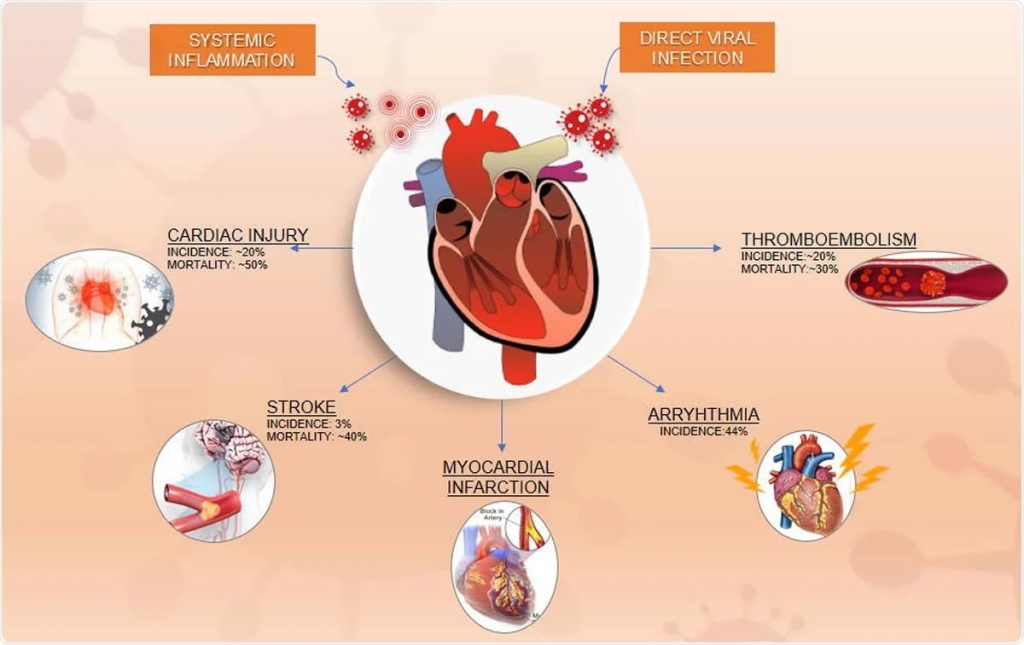
Can COVID-19 damage the heart?

Yes: Although COVID-19 is primarily a respiratory or lung disease, the heart can also suffer.

Temporary or lasting damage to heart tissue can be due to several factors:

Lack of oxygen. As the virus causes inflammation and fluid to fill up the air sacs in the lungs, less oxygen can reach the bloodstream. The heart has to work harder to pump blood through the body, which can be dangerous in people with preexisting heart disease. The heart can fail from overwork, or insufficient oxygen can cause cell death and tissue damage in the heart and other organs.

Myocarditis: inflammation of the heart. The coronavirus may infect and damage the heart’s muscle tissue directly, as is possible with other viral infections, including some strains of the flu. The heart may also become damaged and inflamed indirectly by the body’s own immune system response.

Coronavirus infection also affects the inner surfaces of veins and arteries, which can cause blood vessel inflammation, damage to very small vessels and blood clots, all of which can compromise blood flow to the heart or other parts of the body. “Severe COVID-19 is a disease that affects endothelial cells, which form the lining of the blood vessels,” Post says.

Stress cardiomyopathy. Viral infections can cause cardiomyopathy, a heart muscle disorder that affects the heart’s ability to pump blood effectively. When attacked by a virus, the body undergoes stress and releases a surge of chemicals called catecholamines, which can stun the heart. Once the infection resolves, the stressor has ended and the heart can recover.

Cytokine Storm: A Serious Coronavirus Complication

Most serious of all, Gilotra says, is the possibility of the immune system launching an attack on the invading virus that is so severe that it destroys healthy tissues.

When responding to infection with the coronavirus, the body releases a flood of proteins called cytokines that help cells communicate with one another and fight the invaders.

In some people, perhaps due to a genetic difference, this normal defensive event is exaggerated, leaving them vulnerable to a cytokine storm. In a cytokine storm, the immune system response causes inflammation that can overwhelm the body, destroying healthy tissue and damaging organs such as the kidneys, liver and heart.

A cytokine storm and its resulting heart damage can also affect the heart’s rhythm. “Serious ventricular arrhythmias due to a cytokine storm can be catastrophic,” Gilotra says.

A cytokine storm is difficult to survive. Current research is exploring the possible benefit of using immune-suppressing drugs to treat patients with COVID-19 who experience this serious complication.

Heart Rate and COVID-19

After you have had COVID-19, if you are experiencing a rapid heartbeat or palpitations, you should contact your doctor. A temporary increase in heart rate can be caused by a lot of different things, including dehydration. Make sure you are drinking enough fluids, especially if you have a fever. Symptoms of a rapid or irregular heart rhythm may include:

  • Feeling your heart beat rapidly or irregularly in your chest (palpitations)
  • Feeling lightheaded or dizzy, especially upon standing
  • Chest discomfort

How can I tell if I have developed a heart problem after COVID-19?

In some people, heart rates can vary from fast to slow, unrelated to exertion, for no apparent reason. But, Post says, shortness of breath, chest pain or palpitations after having COVID-19 is a common complaint. “Any of these problems could be related to the heart, but they could also be due to other factors, including the aftermath of being very ill, prolonged inactivity and spending weeks convalescing in bed.”

Shortness of Breath

“You want to consult a doctor if any of your symptoms are severe, especially shortness of breath,” Post says. She recommends using a commercially available O2 (oxygen) saturation monitor.

“Shortness of breath by itself is not always a sign of a serious problem, but if you have that symptom along with low O2 (below 92%), that is a reason to be concerned.” Sometimes people are short of breath with exertion after COVID-19 because they have been less active for a long time and need to gradually build their fitness level back up.

A diagnosis of heart failure after COVID-19 is rare. But if you have shortness of breath or leg swelling after COVID-19, you should contact your doctor, who may recommend evaluation by a cardiologist if tests indicate you are at risk.

COVID-19 Chest Pain

What about lingering chest pain, another common post-COVID complaint? “Chest pain may be nothing serious, but if you are having severe chest pain, get help, especially if it is persistent or if you are also having nausea, shortness of breath or lightheadedness: These could be symptoms of a heart attack.”

“If you have chest pain when you inhale, you might have lung inflammation. Sudden, severe chest pain could be a blood clot in the lung (pulmonary embolism),” Post says.

People recovering from the coronavirus sometimes show symptoms of a condition known as POTS (postural orthostatic tachycardia syndrome). Researchers are exploring whether or not there is a link.

POTS isn’t directly a cardiac problem, but a neurologic one that affects the part of the nervous system that regulates heart rate and blood flow. The syndrome can cause rapid heartbeats when you stand up, which can lead to brain fog, fatigue, palpitations, lightheadedness and other symptoms.

Can COVID-19 symptoms mimic a heart attack?

Yes. People with COVID-19 can have symptoms similar to those of a heart attack, including chest pain, shortness of breath and changes on their echocardiogram (ultrasound of the heart) or EKG. But often when these patients are given an angiogram, there is no evidence of a major blockage in the heart’s blood vessels, which would indicate a heart attack in progress.

Symptoms of myocarditis can also mimic those of a heart attack. Also, viral infections such as COVID-19 can cause very small blood clots to form, which can block tiny blood vessels and cause pain.

People with signs and symptoms of a heart attack should seek urgent medical attention and not manage these symptoms at home.

Is a heart attack more likely after COVID-19?

That depends: Post says that “heart attack” has several different forms. A type 1 heart attack, caused by a blood clot blocking one of the heart’s arteries, is rare during or after COVID-19 infection.

“Type 2 heart attacks are more common with COVID-19,” she says. “This heart attack can be caused by increased stress on the heart, such as a fast heartbeat, low blood oxygen levels or anemia, because the heart muscle isn’t getting enough oxygen delivered in the blood in order do this extra work. We have seen this in people with acute coronavirus disease, but it is less common in those who have survived the illness.”

“Blood tests have shown that during COVID-19, some people have elevated levels of a substance called troponin in their blood, along with EKG changes and chest pain.” Elevated troponin levels are a sign of damaged heart tissue. Sometimes this is from a heart attack. This is less commonly seen after COVID-19.

“During acute COVID-19, elevated troponin levels with an abnormal EKG are linked to higher mortality, but not in patients with a normal EKG,” Post says.

What about heart problems in children after COVID-19?

In general, children who get sick with the coronavirus do not have serious problems as often as adults do. An uncommon but serious complication of COVID-19 called multisystem inflammatory syndrome in children, or MIS-C, can cause serious heart damage, cardiogenic shock or death.

Some children who survive MIS-C can be left with abnormal heart rhythms and stiffened heart muscle that prevents the heart from relaxing normally and beating properly. MIS-C has some similar characteristics to Kawasaki disease.

Is heart damage caused by COVID-19 permanent?

Post says that if symptoms are due to a cardiac cause, recovery depends on the severity of injury. “Very few people have a severe heart attack, such as an acute myocardial infarction, or MI, due to COVID-19,” she says.

Still, heart imaging can reveal minor changes in the heart muscle of some COVID-19 survivors. Post notes that some studies on athletes recovering from the coronavirus have shown some scarring, but stresses that some of these studies did not compare these results with those who had not had COVID-19. How long these minor changes persist — and how they affect heart health — are not yet known. Experts are developing protocols and recommendations for which athletes should get cardiac testing before returning to play.

COVID-19 can also affect the strength of the heart pumping, Post says, but subtle abnormalities in heart pumping are not likely to cause people problems.

A person recovering from COVID-19 may benefit from physical therapy, breathing exercises and, most of all, time. Post advises anyone recovering from COVID-19 should expect a gradual course of recovery, and should not expect a rapid return to their normal activity levels.

Can having COVID-19 make an existing heart condition worse?

“A heart condition could be exacerbated by severe COVID, but not likely after mild or asymptomatic cases,” Post says. “But the effects of the coronavirus on preexisting heart disease are not yet known.”

Can heart problems show up long after COVID-19 recovery?

If you have had COVID-19, recovered and feel all right now, should you worry? Are heart problems likely to show up later on?

Post emphasizes that many of these questions do not have clear answers yet. SARS-CoV-2 was isolated in 2019, and a large number of COVID-19 survivors have only been recovering since 2020. “It is hard to know exactly how the disease will affect people’s hearts long term, and this is just one area of intense concern among researchers

Categories
Biology Covid-19 human body

SARS-CoV-2 Variants Develop in Chronic, Immunosuppressed Patients

SARS-CoV-2 variants have been a key player in the conversation, and public health response, of the COVID-19 pandemic. But where do COVID-19 variants originate? Now, new research reveals that the many SARS-CoV-2 variants are likely formed in chronic COVID-19 patients who suffer from immunosuppression. The research suggests that a weakened antibody response, particularly in the lower airways of these chronic patients, may prevent full recovery from the virus and drive the virus to mutate many times during a lengthy infection. The virus’ ability to survive and reproduce in the immunosuppressed patient’s body—without restriction—leads to the evolution of many variants.

Furthermore, the variants found among those chronically ill with COVID-19 bear many of the same mutations in their evolution as those present in variants-of-concern (VOC) for severe illness—particularly those mutations associated with evading antibodies. The new findings indicate that while rapidly-spreading variants are rare among the many strains borne from immunosuppressed patients, the likelihood increases and they do arise when global infection rates boom.

Since the start of COVID-19, the rate at which the virus evolves has been somewhat puzzling to Adi Stern, PhD, professor of biotechnology at the Shmunis School of Biomedicine and Cancer Research at the Wise Faculty of Life Sciences at Tel Aviv University. During the first year of the pandemic, a relatively slow but constant rate of mutations was observed. However, since the end of 2020, the world has witnessed the emergence of variants that are characterized by a large number of mutations, far exceeding the rate observed during the first year. Various scientific hypotheses about the link between chronic COVID-19 patients and the rate of the accumulation of mutations have surfaced, but nothing definitive has been proven.

“The coronavirus,” noted Stern, “is characterized by the fact that in every population, there are people who become chronically infected. In the case of these patients, the virus remains in their body for a lengthy period of time, and they are at high risk for recurrent infection. In all of the cases observed so far, these were immunocompromised patients. In biological evolutionary terms, these patients constitute an “incubator” for viruses and mutations—the virus persists in their body for a long time and succeeds in adapting to the immune system, by accumulating various mutations.”

The study searched for drivers of VOC-like emergence by consolidating sequencing results from a set of 27 chronic infections in patients at the Tel Aviv Sourasky Medical Center.

According to Stern, the results reveal a complex picture; although no direct connection was found between anti-COVID-19 drug treatment and the development of variants, the researchers discovered that it is likely the weakened immune system of immunocompromised patients that creates pressure for the virus to mutate.

Most substitutions in this set, the authors noted, reflected lineage-defining VOC mutations; however, a subset of mutations associated with successful global transmission was absent from chronic infections.

In fact, the researchers found that there were chronic patients who showed a pattern of apparent recovery, followed by recurring viral infection. In all of these patients, a mutated form of the virus emerged, suggesting that recovery had not been achieved; this is partially reminiscent of HIV following inadequate drug treatment.

Upon closer examination of some patients, the researchers found that when such a pattern of apparent recovery is observed (based on negative nasopharyngeal swabs), the virus continues to thrive in the lungs of the patients. The researchers, therefore, suggest that the virus accumulates mutations in the lungs, and then traverses back to the upper respiratory tract.

The authors believe that they found evidence for dynamic polymorphic viral populations in most patients, suggesting that a compromised immune system selects for antibody evasion in particular niches in a patient’s body. In addition, there is a tradeoff between antibody evasion and transmissibility and that extensive monitoring of chronic infections is necessary to further understanding of VOC emergence

Categories
Biology Covid-19 human body

Omicron XE variant symptoms, severity, treatment. cases so far

Mumbai is the first city to report a case of omicron XE variant, In the U.K., the XE variant was discovered and is a mutation of B.1 and B.2 strains of Omicron. The WHO is currently tracking the XE mutation as part of the Omicron variant. Micron symptoms can include fever, sore throat, scratchy throat, cough and cold, skin irritation and discoloration, gastrointestinal distress, and a dry cough.

Omicron XE Variant

It was detected in the United Kingdom in January 2022 that the new variant XE of COVID-19 was identified. The WHO considers it ten times more contagious than the BA.2 variant. India’s COVID-19 XE variant has recently been updated

Once again, there has been an increase in the Coronavirus outbreak. There has been a fourth wave of Coronavirus in Asia and Europe during the past few weeks. There has been a sudden increase in new cases suspected to be caused by the corona subvariant omicron BA.2. Researchers have found a new corona XE variant in this hour of crisis.

Omicron XE Variant Symptoms

According to the organization, it is difficult to say whether it is fatal given the current situation, but knowing the signs and symptoms will help one avoid contracting the infection. Here are some symptoms of this new variant of the Coronavirus.

This variant is currently being studied. It is common for such a condition to cause early symptoms like fever, sore throat, cough, mucus and cold, and stomach problems. Additionally, the new variant can be even more dangerous for those already ill.

Since it is a mutation of the original Omicron, the vaccine may affect the new variant. The omicron effect in India was different from that in the second wave because of the large number of vaccinations during the third wave.

Omicron XE Variant Severity

Doctor Allison Arwady, Commissioner of Chicago’s Department of Public Health, said Tuesday that omicron “is likely to spread rapidly” and even more rapidly than the delta variant responsible for most of the latest outbreaks in the U.S.

It’s probably three times as contagious as the delta variant. Director Rochelle Walensky said Omicron has a two-day doubling time shorter than delta, indicating higher transmissibility. According to a study released Tuesday, the variant of the virus that is causing a surge in infections in South Africa is better at evading vaccines and causing less severe illness.

However, the data also shows that although the number of cases is increasing, hospitalizations are not rising as fast, which leads scientists to believe that the risk of hospitalization due to the virus is lower than that related to delta or earlier variants. A study adjusted for vaccination status found that admitted adults diagnosed with COVID-19 were 29% fewer than those diagnosed with the wave in mid-2020.

Omicron XE Variant Cases so Far

It is not the vaccine but reaching those at risk that has been the challenge.

Upon being asked if an Omicron vaccine was required, Mahamud said it was too early to tell but stated that a global approach should be taken and that manufacturers should not have the sole decision-making authority.

If you go ahead with Omicron, then a new antigen may emerge that is more immunoevasive or transmissible,” he said. A WHO technical group had recently met to discuss vaccine composition.

In his view, the most effective way to reduce the impact of this variant would be for the WHO to have 70% of each country’s population vaccinated by July, rather than offering third and fourth doses in some nations.

As the number of cases due to Omicron has risen, some countries, including the United States, have shortened quarantine periods for healthy people and allowed them to return to work or school earlier.

According to Mahamud, leaders should decide how strong the local epidemic is. Countries with high numbers of cases may need to omit isolation periods to maintain essential services.

Some places have shut mainly it out, so maintaining the entire 14-day quarantine period might be the best option. You should invest heavily in keeping your numbers very low if your numbers are tiny.

Categories
Biology Covid-19 human body

Post covid-19 syndrome

Long Covid-19
• Fever (83-99%)
• Cough (59-82%)
• Fatigue (44-70%)
• Anorexia (20-84%)
• SOB (31-40%)
• Myalgia (11-35%)
• Others: anosmia, loss of taste, GI, headache
Who gets Long Covid-19?
• Factors that appear to be associated with a greater risk of suffering from
“Long COVID-19” appear to be:
• Increasing age
• Excess weight/ obesity
• DM-2 ,COPD,CKD
• Patients on immunosuppression medication ,organ transplant recipients
• Multiple symptoms at presentation
Fever
• May be treated symptomatically with Paracetamol or non-steroidal antiinflammatory drugs.
• Monitoring functional status in post-acute coivd-19 patients is not yet an
exact science.
Chest Pain
Chest pain is common in post-acute covid-19 syndrome approximate
incidence 12 to 44 %. The clinical priority is to separate musculoskeletal
and other non-specific chest pain from serious cardiovascular conditions.
Cardiopulmonary complications include myocarditis, pericarditis, myocardial
infarction, dysrhythmias, and pulmonary embolus; they may present
several weeks after acute covid-19. They are commoner in patients with
pre-existing cardiovascular disease
Cough
• chronic cough as one that persists beyond eight weeks. Up to that time,
and unless there are signs of super-infection or other complications such
as painful pleural inflammation, cough seems to be best managed with
simple breathing control exercises and medication where indicated.
Thromboembolism
• Covid-19 is an inflammatory and hypercoagulable state, with an increased
risk of thromboembolic events.
• Many hospitalized patients receive prophylactic anticoagulation.
thromboprophylaxis.
• If the patient has been diagnosed with a thrombotic episode,
anticoagulation and further investigation and monitoring should follow
standard guidelines.
Neurological Sequelae
• Ischemic stroke, seizures, encephalitis, and cranial neuropathies have
been described after covid-19, but these all seem to be rare.
• A patient suspected of these serious complications should be referred to a
higher centre.
• Common non-specific neurological symptoms, which seem to co-occur
with fatigue and breathlessness, include headaches, dizziness, and
cognitive blunting (“brain fog”).
Breathlessness
• A degree of breathlessness is common after acute covid-19. Severe
breathlessness, which is rare in patients who were not Hospitalised,may
require urgent referral. Breathlessness tends to improve with breathing
exercises .
• Pulse Oximeters may be extremely useful for assessing and monitoring
respiratory symptoms after covid-19.
• An exertional desaturation test should be performed as part of baseline
assessment for patients whose resting pulse oximeter reading is 96% or
above but whose symptoms suggest exertional desaturation (such as lightheadedness or severe breathlessness on exercise).
• Typically, oxygen saturation (pulse oxymeter) would be a daily reading
taken on a clean, warm finger without nail polish, after resting for 20
minutes; the device should be left to stabilize and the highest reading
obtained should be recorded.
Fatigue
• The profound and prolonged nature of fatigue in some post-acute covid-19patients shares features with chronic fatigue syndrome described after otherserious infections including SARS, MERS, and community acquired pneumonia.
• We found no published research evidence on the efficacy of eitherpharmacological or non-pharmacological interventions on fatigue after covid-19.
• Patient resources on fatigue management and guidance for clinicians on returnto exercise and graded return to performance for athletes in covid-19 arecurrently all based on indirect evidence.
Fatigue Management
which may include:
• Energy management – 3 P’s: plan, priorities and pace,
• Anxiety- Re-assure normal for fatigue after viral infection
• Routine Gentle activity within self assessed limitation Physical activity
advice
• Rest and Sleep
• Hydration and nutrition
• Pain

Categories
Biology Covid-19 human body

Can coronavirus cause diabetes ,or make it worse?


New cases of diabetes

At the start of the coronavirus pandemic, doctors started to raise concerns around new cases of diabetes in people who had caught the virus.

Since early reports first came to light, we’ve seen results from larger studies looking at big groups of people who’ve recovered from coronavirus. One study tracked over 47,000 people in England who had been admitted to hospital because of coronavirus before August 2020. The researchers followed their health for up to seven months after they were discharged and found 5% of people went on to develop diabetes.

They also showed that people who’d been in hospital with coronavirus were 1.5 times more likely to be diagnosed with diabetes after they’d been discharged than people of the same age and background who hadn’t been in hospital with coronavirus.

In 2022, researchers in the United States published findings from their analysis of health insurance data from around 1.6 million children, under the age of 18 years.

They looked at who’d been diagnosed with diabetes between March 2020 – March 2021 and if there were any differences in rates of diagnoses between children who’d had coronavirus, children who hadn’t, and children who had other types of respiratory infections. The study didn’t distinguish between type 1 and type 2 diabetes.

The researchers studied two different sets of data. In both datasets, children who’d had coronavirus were more likely to later be diagnosed with diabetes than those who hadn’t had coronavirus or had a different type of respiratory infection.

In the first dataset, the researchers found after having coronavirus, children were around 2.5 times (166%) more likely to develop diabetes than children who hadn’t been infected. In the other dataset the increased risk was smaller, at 31%. These differences in risk are likely down to differences in the way data was classified and collected. Respiratory infections that weren’t coronavirus were not found to be linked with an increased risk of diabetes.

The evidence to suggest a link between coronavirus and new cases of diabetes is growing but there’s still a lot we don’t know. We can’t yet be sure if coronavirus is directly causing diabetes, or whether there are other factors that could explain the link.

What type of diabetes?

Small studies have suggested that rates of new type 1 diabetes diagnoses in children were higher in 2020 compared to average rates in previous years.

The causes of type 1 diabetes are complex, and scientists think that there are a variety of environmental and genetic reasons that could explain why the condition develops.

Viruses could be one of these reasons, but the evidence around this is mixed and we just don’t know for sure yet. And as coronavirus is so new, there’s a lot we still need to learn about how it interacts with our immune system and its longer-term effects.

Cases of new type 2 diabetes diagnoses have also been reported in people who have had coronavirus. This could be related to the effects of coronavirus on the body, or the effects of lifestyle changes due to the pandemic, speeding up a type 2 diabetes diagnosis or bringing existing type 2 to light.

Scientists are also looking into the possibility that coronavirus could be causing a new type of diabetes. Blood sugar levels in some people with coronavirus rise due to the stress the body is under when trying to fight the infection, or because of some of the drugs used to treat it. But we don’t yet know if, or when, high blood sugar levels in people with coronavirus return to normal after they have fully recovered.

What’s going on inside the body?

One theory is that inflammation inside the body caused by coronavirus brings about insulin resistance, a feature of type 2 diabetes, which means the body isn’t able to make proper use of the insulin it’s producing.

We also know that coronavirus uses a protein found on the surface of some cells, called ACE-2, to enter and infect them. ACE-2 is found in the pancreas and there’s some evidence that this makes it vulnerable to coronavirus infection.

Small studies looking at pancreas cells grown in the lab and pancreas samples taken from people who sadly died from coronavirus have suggested that the virus can enter and infect insulin-producing beta cells in the pancreas, causing them to die or change how they work. This means people can’t produce enough insulin.

Another theory suggests that when coronavirus infects the pancreas it could trigger the immune system to attack and destroy beta cells, a key feature of type 1 diabetes

Research into the biological processes that explain how and why coronavirus could cause diabetes is at an early stage and we need to be cautious about applying what scientists see in the lab to what’s happening in people infected with the virus. And we need more research to look at the types of diabetes we’re seeing in people who have had coronavirus to understand whether these are cases of type 1 and type 2 diabetes or something new altogether.

Finding answers

Scientists are working hard to find answers and are building a database of new cases of diabetes in people with coronavirus, called the CoviDiab registry. This will give them the information they need to carry out more thorough studies and discover more. 

On top of this, the government has pledged £18.5 million to fund research to better understand and treat the longer term effects of coronavirus. These projects could give us important insights into new cases of diabetes after coronavirus.

Research, including the PHOSP-COVID study, will also help us to fully understand if coronavirus can make existing type 2 diabetes worse in people who already live the condition. The UK-wide study is following 10,000 people who were in hospital with coronavirus to monitor the long-term impact of the virus on their health. This study will include people with type 2 diabetes and will help us to understand how their condition has been affected.

Categories
Biology Covid-19 human body

Is ‘happy hypoxia’ in COVID-19 a disorder of autonomic interoception? 


One of the aspects of coronavirus disease 2019 (COVID-19) puzzling clinicians coping with management of the pneumonia that one of the disease’s complications is the presentation of patients with extremely low blood oxygenation, but no sensation of dyspnea [1]. This phenomenon has given rise to the term “happy hypoxemia” [1]. In the Wuhan cohort of patients infected with severe acute respiratory syndrome coronavirus 2 (SARS-COV-2), only 19% complained of shortness of breath; 62% of those with severe disease and 46% of those who ended up intubated, ventilated or dead did not present with dyspnea [2]. What strikes us as odd, is that these patients are tachycardic with tachypnea and respiratory alkalosis. These signs suggest that at least some sensory information must reach the brainstem to elicit a partial compensatory reflex respiratory response that is sufficent to lower the CO2 level, which diffuses more rapidly across the alveoli than oxygen. However, these patients have no conscious awareness of hypoxia.

The homeostatic afferent information emanating from the body forms part of our interoceptive system, which senses the body’s physiological condition, creates awareness, and leads to conscious feelings or symptoms [3]. This process occurs via projections from the brainstem to the cortex that allow the brain to process homeostatic afferent signals. When the brain receives the signal of internal hypoxia, it gives rise to the sensation of “air hunger” and a need to breathe, which is curiously absent in severe COVID-19 patients.

The respiratory responses to hypoxia occur due to the presence of sensory nerves in chemoreceptive areas. These recognize the shift in the internal environment, relay the information to the brainstem, and stimulate an increase in the ventilatory drive. Respiratory pathology elicits autonomic reflexes, such as bronchospasm, secretions, or cough. Dyspnea is the conscious distressing symptom of difficulty in breathing that can be triggered by many clinical conditions [4]. In the setting of cardiopulmonary illness, dyspnea arises from inputs from multiple homeostatic afferents. Interoceptive processing of these signals create a sense of shortness of breath and the urge to breathe. This primitive brainstem reflex is essential for survival as it can respond to a wide range of stimuli, including hypoxia, hypercapnia, irritants, acidosis, airway collapse, and pulmonary vascular congestion.

The glossopharyngeal afferents innervating the carotid body, and the vagal afferents innervating the respiratory tract, play a vital role in monitoring organ function and controlling body homeostasis through activation of the autonomic nervous system. These neurons are the primary sensory inputs of a series of reflex circuits that control key visceral functions, including blood pressure, swallowing, gastrointestinal motility, airway caliber, and tidal volume [4]. They also produce the first afferents for the conscious sensation of dyspnea.

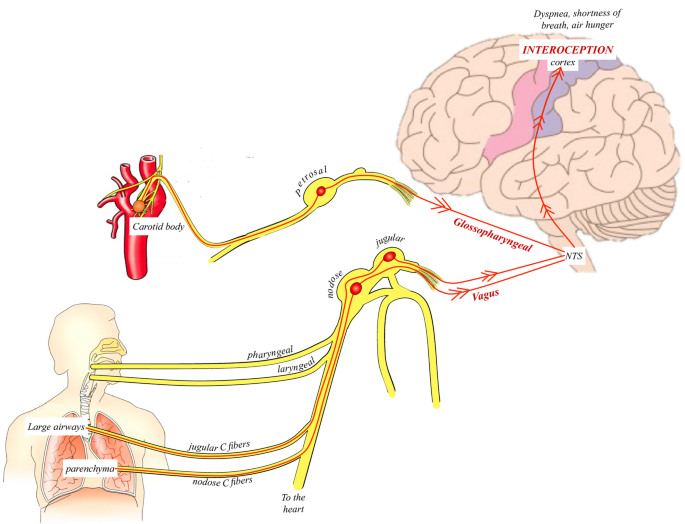
Mechanical or chemical stimuli of pulmonary receptors expressed on afferent vagal nerve terminals in the lung arrive in the brainstem through small-diameter myelinated (Aδ)- or unmyelinated (C)-fiber nerve axons with cell bodies in the jugular or nodose ganglia of the vagus (Fig. 1). Both jugular and nodose pulmonary C-fiber afferents respond to inflammatory mediators and tissue acidification in a graded fashion; these can be considered “nociceptive” fibers as they do not react to eupneic breathing or other regular events, but are excited by “noxious” or “potentially noxious” stimuli. The jugular and nodose nerve fibers of the lung have distinct differences in terms of their embryologic origin, pharmacological responses, and neurochemistry. Thus, they serve different functions–which are hard to tease apart in the intact human. The nodose C-fibers probably play a more prominent role in the genesis of dyspnea and the subjective sensation of breathing difficulty. In contrast, jugular fibers may play a more prominent role in coughing [4]. The vagal C-fiber afferents innervate the larynx response within seconds to laryngeal discomfort and appear to be important in stimulating cough. Meanwhile, the dyspneic sensation is specifically related to the activation of a subgroup of nodose vagal afferent that express adenosine receptors. The afferent information arriving from the vagal and glossopharyngeal nerves converges at the nucleus of the tractus solitarius in the medulla, a key relay site for a variety of other critical homeostatic signals. From here, there are connections to the higher centers of the brain towards the thalamus, somatosensory cortex, insular cortex, and amygdala, all involved in the perception of breathing.

figure 1
Neurophysiology of dyspnea.

Neurophysiology of dyspnea. Main afferent (sensory) homeostatic information arising from areas of the vasculature and lungs give rise to the sensation of dyspnea. When stimulated, the chemoreceptive and mechanoreceptive signals are transmitted to the brainstem via the glossopharyngeal and vagus nerves, converging at the nucleus of the tractus solitarus (NTS). Subsequent projections continue to the somatosensory cortex and other higher brain regions, which provide the interoceptive sense of the internal environment of the body. The processing of these signals within the cortex gives rise to sensations such as air hunger, dyspnea, or shortness of breath. This interceptive processing appears to be abnormally blunted in patients with coronavirus disease 2019

The pathophysiology underlying the dissociation between profound hypoxemia and overt dyspnea in COVID-19 pneumonia is, at this point, unclear. In our experience, this disassociation exists in patients with severe lesions in the glossopharyngeal or vagus nerves due to damage to the cranial nerve after neck cancer or congenital neuropathies, but these findings are unexpectedly absent in the autopsy reports that are now emerging in COVID-19 cases.

The possibility that the novel SARS-COV-2 is neuro-invasive remains controversial. On one hand, in severe COVID-19 cases, neurological symptoms, such as anosmia, headache, altered mental status, seizures, and delirium, are common; and SARS-COV-2 is found in the cerebral spinal fluid and thought to enter the brain through synapse-connected routes [1]. The possible damage to the afferent hypoxia-sensing neurons in persons with COVID-19 could be due to the intense cytokine storm or the direct effect of SARS-COV2 on mitochondria or on the nerve fibers [1]. On the other hand, the findings from brain magnetic resonance imaging (MRI) studies and pathology reports in lethal COVID-19 cases are inconsistent and do not provide a pathophysiological correlate to explain the absence of dyspnea [5]. The common brain pathology findings in fatal COVID-19 cases are multiple areas of ischemic and micro-bleeding hemorrhagic strokes with only small regions of inflammation; however, it is worth noting that at least 40% of cases brain imaging studies were normal and there were no signals of brainstem abnormalities on the MRI scans. The neurological manifestations of other coronaviruses are even less well studied, but neuropathy and myopathy are reported in a handful of cases of both severe acute respiratory syndrome (SARS-CoV) and middle eastern respiratory syndrome (MERS-CoV). What makes COVID-19 most intriguing at this point is what the patient does not sense and what the brain does not show in terms of pathology.

Regardless of the uncertain underlying pathology, reduced perception of dyspnea is a disorder of blood-gas interoception. It may mask the severity of the medical status and ultimately delay patients from seeking urgent medical care. Patients admitted with COVID-19 can suffer sudden death after voluntary “breaks” from the oxygen supplementation. Recognizing “happy hypoxia” as a feature of COVID-19 pneumonia has led to better patient care, with physicians relying on other markers of disease, such as tachycardia, fever, or serum inflammatory acute reactants, to guide treatment or discharge patients from the hospital. Continuing research on how the novel coronavirus impacts peripheral sensors and neural pathways holds the promise of further clarifying its mechanisms.

Categories
Covid-19 human body

Antibody From Recovered COVID-19 Patients Found To Substantially Reduce Severity of Disease

Study found that an antibody, P36-5D2, demonstrated a substantial decrease in infectious virus load in the lungs and brain, and reduced lung disease in laboratory models.

In a study jointly conducted by the Bio-Safety Level 3 (BSL-3) Core Facility at the NUS Yong Loo Lin School of Medicine (NUS Medicine) and Beijing Tsinghua University, an antibody was found to be capable of neutralizing major SARS-CoV-2 variants of concern.

As SARS-CoV-2 variants continue to emerge and spread around the world, antibodies and vaccines to confer broad and potent neutralizing activity are urgently needed. The paper titled “A Potent and Protective Human Neutralizing Antibody Against SARS-CoV-2 Variants,” which was first published in Frontiers in Immunology December 2021, explained how the team isolated and characterized monoclonal antibodies from individuals infected with SARS-CoV-2.

In the study, crystal and electron cryo-microscopy structure analyses revealed that P36-5D2, when targeted to a conserved epitope on the receptor-binding domain of the spike protein, withstood three key mutations. These mutations, namely K417N, E484K, and N501Y, are found in variants that escape from many potent neutralizing monoclonal antibodies. A single intraperitoneal injection of P36-5D2 as a prophylactic treatment demonstrated protection of the in vivo models from severe disease in the course of an infection with SARS-CoV-2 Alpha and Beta variants. These models had normal activities and body weight and were devoid of infection-associated death for up to 14 days, and demonstrated a substantial decrease of the infectious virus in the lungs and brain, as well as reduced lung disease.

The effects of P36-5D2 serve as an important reference for the development of antibody therapies against SARS-CoV-2 and its current and emerging variants. The team is conducting further research to study its effects of protection against the infection of the Delta and Omicron variants.

“The discovery of this antibody means we can be more confident in our fight against COVID-19 and its variants. With a strong and established collaboration within NUS Medicine and Beijing Tsinghua University, our scientists would be able to improve our technology to identify antibodies that can potentially treat more unknown variants that may come up in the future,” said Dr. Mok Chee Keng, Head, Science and Service Support Team, BSL-3 Core Facility at NUS Medicine.

Categories
Biology Covid-19 human body

Omicron Not “Same Disease We Were Seeing A Year Ago”: Oxford Scientist

The strain first discovered at the end of November appears to be less severe and even patients who do end up in the hospital spend less time there, John Bell, regius professor of medicine at Oxford, said on BBC Radio 4’s Today program.

The omicron variant that’s taking the world by storm is not “the same disease we were seeing a year ago,” a University of Oxford immunologist said, reinforcing reports about the strain’s milder nature.

The strain first discovered at the end of November appears to be less severe and even patients who do end up in the hospital spend less time there, John Bell, regius professor of medicine at Oxford, said on BBC Radio 4’s Today program. 

“The horrific scenes that we saw a year ago — intensive care units being full, lots of people dying prematurely — that is now history in my view, and I think we should be reassured that that’s likely to continue,” Bell said. 

Bell’s comments came after the U.K. government said it wouldn’t introduce stricter Covid-19 restrictions in England before the end of the year. 

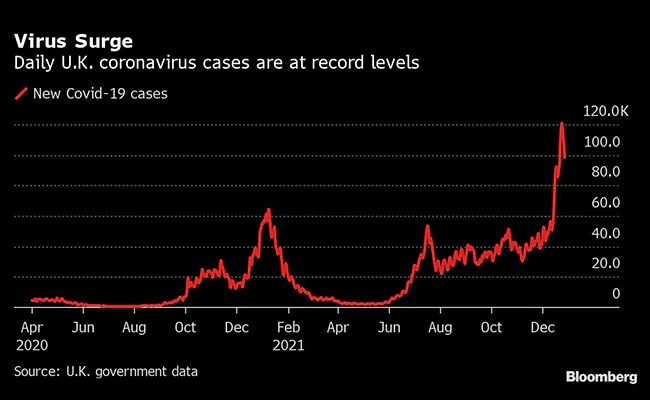
Infections have jumped by more than a quarter of a million in the past week, heaping pressure on Prime Minister Boris Johnson to respond. Health Secretary Sajid Javid late Monday said he’s monitoring the latest data and urged people to be careful, particularly at New Year celebrations. 

Stay Home Stay Safe!!

virus surge
Categories
Covid-19 environment

CO2 Emissions bounce back!!

A new report by multiple international scientific agencies has flagged that fossil fuel emissions from coal, gas cement etc are back to 2019 levels or even higher in 2021.

Fossil CO2 emissions from coal, oil, gas and cement – peaked at 36.64 GtCO2 in 2019, followed by a significant drop of 1.98 GtCO2 (5.6%) in 2020 due to the Covid-19 pandemic.

Based on preliminary estimates, global emissions in the power and industry sectors were already at the same level or higher in January-July 2021 than in the same period in 2019, before the pandemic, highlights of the United in Science report said on Thursday.

United in Science is coordinated by the World Meteorological Organization (WMO), with input from the UN Environment Programme (UNEP), the World Health Organization (WHO), the Intergovernmental Panel on Climate Change (IPCC), the Global Carbon Project (GCP) etc. The full report will be released later today.

While emissions from road transport remained about 5% lower. Apart from aviation and sea transport, global emissions were at about the same levels as in 2019, averaged across those 7 months.

Concentrations of all major greenhouse gases – carbon dioxide (CO2), methane (CH4) and nitrous oxide (NO) continued to increase in 2020 and the first half of 2021, the report said, adding that overall emissions reductions in 2020 likely reduced the annual increase of the atmospheric concentrations of greenhouse gases “but this effect was too small to be distinguished from natural variability.”

United in Science has reiterated that there is high chance that global average temperature in one of the next five years will be at least 1.5 degrees Celsius (°C) higher than pre-industrial levels. Annual global mean near-surface temperature is likely to be within the range 0.9°C to 1.8°C in the next five years. There is a 40% chance that average global temperature in one of the next five years will be at least 1.5°C warmer than pre-industrial levels but it is very unlikely (~10%) that the 5-year mean temperature for 2021–2025 will be 1.5°C warmer.

The report has also flagged that coastal cities around the world; low lying coastal areas, small islands and deltas will need adaptation strategies urgently. Global mean sea levels rose 20 cm from 1900 to 2018 and at an accelerated rate of 3.7+0.5 mm/yr from 2006 to 2018. Even if emissions are reduced to limit warming to well below 2°C, global mean sea level would likely rise by 0.3–0.6 m by 2100. “Adaptation to this residual rise will be essential – adaptation strategies are needed where they do not exist – especially in low-lying coasts, small islands, deltas and coastal cities,” the report has said.

“Throughout the pandemic we have heard that we must build back better to set humanity on a more sustainable path and to avoid the worst impacts of climate change on society and economies. This report shows that so far in 2021 we are not going in the right direction,” said WMO Secretary-General Petteri Taalas.

This report shows just how far off course we are. The past five-year period is among the hottest on record. We continue to destroy the things on which we depend for life on Earth. Ice caps and glaciers continue to melt, sea-level rise is accelerating, the ocean is dying and biodiversity is collapsing. This year, fossil fuel emissions have bounced back to pre-pandemic levels. Greenhouse gas concentrations continue to rise to new record highs. We now have five times the number of recorded weather disasters than we had in 1970 and they are seven times more costly. Even the most developed countries have become vulnerable,” said UN Secretary-General, António Guterres on the launch of the report.

He added that UN climate negotiations (COP26) this November must mark that turning point. “By then we need all countries to commit to achieve net zero emissions by the middle of this century and to present clear, credible long-term strategies to get there. We need all countries to present more ambitious and achievable Nationally Determined Contributions that will together cut global greenhouse gas emissions by 45% by 2030, compared to 2010 levels. Nothing less will do.”

Guterres, and UK Prime Minister Boris Johnson have called an informal, closed-door roundtable with a small but representative group of heads of state and government, on the sidelines of the General Assembly, on Monday September 20. The Informal Climate Leaders Roundtable on Climate Action follows the recent report of the Intergovernmental Panel on Climate Change and comes less than six weeks before the COP26 Climate Change Conference in Glasgow.

IPCC’s report last month had flagged that the world may have lost the opportunity to keep global warming under 1.5°C over pre-industrial levels. The 1.5°C global warming threshold is likely to be breached in the next 10 to 20 years by 2040 in all emission scenarios including the one where carbon dioxide (CO2) emissions decline rapidly to net zero around 2050.

According to senior officials in the UN, the focus of the meeting will be a road map for the 1.5°C goal; climate mitigation and adaptation finance particularly the commitment to mobilise $100 billion per year by 2020 by developed countries.

Design a site like this with WordPress.com
Get started